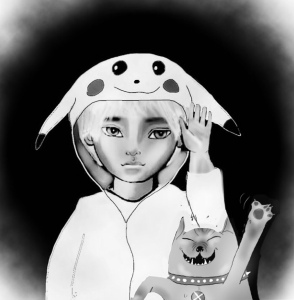
Rejecting Soma

image1
Steve McAuliffe


And so we find ourselves now, living through these dying days of drip-fed Soma
And incremental soft dogma
A shiny self-promotional world in which oppression
Finds its manifestation
Behind manifold masks and expert skin-grafts
And the grim oppressor dons the cloak of freedom
Whilst secretly shoring up the already- mighty fortified walls
And still, the remaining doped-up shackled serfs do not determine
The true extent and nature of their own imprisoning
Coz from the earliest of ages
We were taught by rote
Passive obedience
And stage-managed subservience – to an overlord we would never ever encounter
For a good old while back there it seemed we enjoyed our dreams
And steered-fantasies well enough
Electable interchangeable front-men and women
Human sales-pitch-faces for the permanent machine
Selling us a nightmare as an attainable dream –
-Surface change we could believe in
Tiny almost imperceptible alterations to the pitch and speed of the bleeding
But there is something fundamental changing
Trust me, they can feel the swell of the terra firma shifting
And what was certain seems now uncertain – consequently all the stake-holders and placeholders are to be found keening
Fretting, sweating
At the terrifying possibility that the 100th monkey has finally awoken
For outside their diminishing reach, somewhere out there
Something is stirring
Deep within the caverns of solitude and despair
And yes, they have the means to monitor all these emerging tangled networks of awakening
But they lack the tools to close up the magic box
Thus those who would be dream-weavers
Are now reduced to mere observers
Banks and banks of screens in bunkers
Track and stack the information into computer servers
But still scramble to make sense of a narrative ever-shifting
Ever-developing
Enveloping the still-evolving minds of those who curse the status quo
And consequently they damn the very day we became our own narrators
Began by-passing the machine-selected editors
Laughing in the face of stone-faced men
Whose job it is to rein us in

See, nowadays
Only a select brand of ageing greying husks
Still place their misplaced trust
In twisted dangerous narratives and a machine that’s doomed to rust

It’s coming.
Trust me, this is the hour before the breaking dawn.

You can listen to Steve perform this poem on our pod The Great Sweary-ing In 

Brexit Turns Up Heat In Belfast

Today, power-sharing collapsed in Northern Ireland.

And nobody noticed.

They’ll notice soon enough, though.

The British prime minister, Theresa May, has made a solitary visit to her westernmost outpost in her half-year in the job. Even then, she didn’t give the impression that she had much of a grasp on affairs in those six counties.

Campaigning – albeit half-heartedly – on the Remain side of Britain’s European Union referendum last year during her time as interior minister, she visited the North where she made plain that the immediate consequence of Brexit would be the inevitable return to a hard border between North and South. Now, returning as prime minister with the referendum lost, she U-turned and insisted there would be no return to the border of the past.

It’s not just Theresa May who doesn’t understand – or care about – Northern Ireland. This evening, as news filtered through of the end of devolution in the statelet, I flicked between RTÉ’s Six-One News programme and the BBC Six O’Clock News. The main item on the BBC’s programme was the beginning, in London, of an inquest into a terrorist attack in Africa last summer. RTÉ’s offering was to devote a full ten minutes at the start of the programme.

The cavalier contempt for the devolved institutions could not be clearer. It’s the opposite of what Gordon Brown promised as Unionists lashed out in fear at the climax of the independence referendum: far from being “the closest thing to federalism”, we are left with a Union in which the state broadcaster doesn’t consider the collapse of democracy in one of its constituent states to be important enough to lead its news programme.

They’ll stand up and take notice soon enough, though.

Whilst you can find far more in-depth analyses of what’s gone wrong in northern Ireland on news media websites, a Reader’s Digest version of it is this:

Since Ian Paisley was ousted by fundamentalists in his Democratic Unionist party, the relationship between Unionist and Nationalist parties has grown more brittle by the day. Unionist arrogance has grown, and the emergence of Arlene Foster as the leader of Unionism led to a deeper sectarianising of Unionism than has been seen since the days of the former Unionist state in the North.

The DUP has systematically refused to enact an Irish Language Act agreed to in the St Andrews Agreement (Unionists in northern Ireland have as much fear and hate of the Gaelic language as their counterparts in Scotland), and have stripped funding for Irish language schemes (including a scheme run by Líofa to send children from deprived areas on trips to the Gaeltacht) and projects viewed by them as being insufficiently Unionist – such as a planned peace centre on the site of the abandoned Maze prison camp – in order to funnel £1,9m (€2,2m) of taxpayer’s money to fund local Orange halls.

So far, so Unionist. And one ought to remember that the Orange Order is itself a minority sect within Unionism, and it is Unionist taxpayers’ cash too which is being misdirected to prop up these hate groups.

The final straw for Sinn Féin was the news that Arlene Forster, as environment minister, had catastrophically mishandled a scheme designed to financially incentivise people who availed of renewable heating.

Despite knowing that the scheme had been so badly misdesigned as to pay users £1.60 (€1.82) for every £1 (€1.14) of fuel purchased, Foster allowed the project to carry on for months, at a cost to the Northern Ireland taxpayer estimated at £490m (€557m). One farmer is set to receive £1m (€1.14m) for heating an empty barn.

So far, Foster has consistently refused to reveal whether there is any correlation between the (secret) list of those who availed of the scheme after the flaw was brought to the DUP’s attention, and the (equally secret) list of those who donate money to the DUP.

With Foster refusing to stand aside as co-First Minister pending the result of an inquiry into her actions, Sinn Féin withdrew from the power-sharing Executive, leading to the collapse of devolution this afternoon.

And so far, so northern Ireland.

But northern Ireland’s assembly no longer exists in isolation.

The British Supreme Court is likely to rule shortly that the May regime requires the consultation – and perhaps the assent – of the devolved administrations to invoke Article 50 of the Treaty of Lisbon, which is at present Mrs May’s preferred route of withdrawing the United Kingdom from the European Union.

For their part, Sinn Féin have made it clear that there will be no return to the status quo.

There will be no administration if Arlene Foster is the Unionist selection as co-First Minister. And with no administration in place in Belfast, it would be rather difficult to consult it.

The British minister to the North has made it clear that he will not countenance assuming the powers of Acting First Minister as several of his predecessors did.

So there will be political deadlock in the North, blocking Brexit until it is sorted. And the May regime will not – cannot – over-ride it. Whilst they can do what they want to Scotland and Wales, and will have the enthusiastic support of the local Labour and Conservative parties to do so, the devolution they have extended to Northern Ireland is different.

Power-sharing in Northern Ireland is achieved not by an internal settlement as in Scotland and in Wales, but by dint of an international, legally-binding treaty. And, what’s more, a treaty with an EU member state which has power of veto over any deal the UK negotiates with the European Council.

Secondary to this, of course, is the fact that the Good Friday Agreement secures the right of anyone born in northern Ireland to choose whether to bear Irish – EU – citizenship, or to be a subject of the United Kingdom. They can also be both, simultaneously being a citizen of the European Union and not being a citizen of the European Union.

It will be interesting to see how the May regime copes with the dichotomy of one set of United Kingdom subjects having the right to live, work and settle in the European Union while the other 60-odd million of us don’t.

Not for the first time, one is left with the impression that the British government would much rather Northern Ireland quietly went away.

With a divided Unionist electorate, and a Sinn Féin in no mood to yield to either the Unionists or the British any further, a Border Poll might be necessary before Brexit happens.

The Tories, Ukip, and Scottish Labour may be bringing us a “red, white and blue Brexit”. But it’s looking less likely by the day that that Brexit will include Scotland and Northern Ireland.

The Great Sweary-ing In

Available FREE on iTunes and Podbean

IMG_20170115_103455.jpg

The theme for our first podcast of 2017 is Hope and, as usual, the Ungagged team have come up with a vast array of different interpretations.

In this episode Max Newland reminds us that the tide always goes out before a tsunami, Debra Torrance talks about the hopeful start to 2017 in Scotland, and Andrew McPake asks what the real aims of unionism in regards to Scotland are and we have an update from Ruth Hopkins.

Joe Solo talks about the erosion of hope through the politics of despair, Chuck Hamilton reminds us that white + poor does not = bigot, Matt Geraghty discusses hope in hopeless times and Victoria Pearson urges us to fight to regain our home ground in Hope is a Revolutionary Act.

We have Steve McAuliffe with his poem Rejecting Soma,  Oor Raiph, Eric Joyce,  Tommy Ball and Allan Grogan also talk about hope, and we have music from Husky Tones, Chess Smith, Pilgrims, Argonaut, The Babel fish Project, Victoria Långstrump, The Agitator, Dream NailsThe Kara Sea, Colour Me Wednesday, and Thee Faction.

screenshot_20170115-132028

Keep an eye on our twitter and facebook over the next couple of weeks for Partially Ungagged – bitesize pieces of this pod for when you’re in a hurry!

The Agitator

Are you agitated? You should be…

This rabble-rousing act feature 24yr-old Derek Meins on vocals, accompanied by both Robert Dylan Thomas and ‘T-Train’ on thunderous double-drums. Derek’s force-of-nature voice and rallying-call songs are unashamedly political but aim to inspire and energise rather than dictate some dubious ideology.

The Agitator’s music is stripped-down, loud and in yer face. No frills, primal. “Guitars are for decadent capitalist sissies!” Though starkly contemporary, their sound contains classic ingredients harking back to the fifties and depression-era thirties. It will undoubtedly be a crucial soundtrack for the coming era of austerity and unrest.

“I wanted a new kind of music, nothing more than banging, stamping, clapping and voices, something anyone could do anywhere, on a march, at a protest, on the barricades…”

Derek’s career began early, he signed to Rough Trade at the tender age of fourteen with his Berwick-Upon-Tweed schoolboy band, Eastern Lane. They released two albums on RT before going their separate ways. Derek’s Scottish burr was next heard on his 2008 solo album, ‘The Famous Poet Derek Meins’. Robert Dylan Thomas is already highly-regarded for his drumming on The Maccabees first album. And this is the first serious outing for recent addition, 20yr-old ‘T-Train’.

Seeing The Agitator’s storming live performances, your faded faith that rock’n’roll might again be inspirational, might again be a force for change, will be renewed.

“This financial crisis brought everything to a head for me – The blatancy of social injustice, the rising unemployment, the mortgaging of this generation’s future, the never-satisfied greed of the super-rich, and the incompetent weakness of our politicians. I couldn’t just carry on writing arty songs hoping someone else would do something about it. That’s all The Agitator is – One man’s small attempt to do something. LOUDLY!”

The Agitator released his first double-A-side single, ‘Get Ready’ / ‘Let’s Start Marching’, in June 2010 and his second, ‘Give Me All That You Got’, in November. His album, to be titled simply, NO!, will follow in early 2011.The Agitator recently launched a protest campaign based around a simple idea: NO!-ism. Just say NO! – to all that’s badly wrong with the present ridiculous state of affairs. He’s convinced it could change everything if our fearful politicians discovered how many of us are angry and ready to voice their discontent loudly, scrawling the simple exclamation, NO!, across the nation’s walls and consciousness.

Check out the Agitator on Facebook or Soundcloud

Pilgrims


Screenshot_20170107-163415.jpg

A sound born in a storm. This is what happened when a bird fell from the sky and foxes followed us home. This is supernatural, homespun honesty. This is soup, at 4am. This is a map of the stars that trace our fate. This is paprika tea. This is animal instinct. This is our story. Our music.

This is the sound that came from a gorge . This is what happened when lovers cut each other’s hair with a samurai sword. This is inside out and up ‘n’ down. This humble creation from this hibernation. Baring and purging. This is defining heroes. This is katsu curry & fermented pears. This could be winter. These are our scars. This is our music.

This is the chaos of living with panthers in a house by the sea, where ravens share their secrets with those who speak their language. This is our allegiance to our ancestors and the salt in our Bourbon. Two years of travelling the sun, we are finally home.

These guys are powerful and soft. Grips the heart and the imagination with vivid imagery, telling stories of the wild

 –Jules McAllister

Follow Pilgrims on Bandcamp

Or on twitter

Chess Smith

Queen artwork.jpeg

Chess Smith, a singer-songwriter based in Kent, began her career working with local bands in London and the southeast. Her talent, strong work ethic and infectious personality soon brought her to the attention of international songwriter and producer Ben Copland.

Ben mentored Chess, shaping her as the voice of electronica outfit ‘Mooli’ and wrote, produced and released their first EP ‘Love Hurts’ in 2008. ‘Love Hurts’ was well supported on the dance scene and led to Chess, with Mooli, performing at some of London’s coolest venues, including the world renowned ‘Club 100’ in Oxford Street. The EP received airplay on several radio stations, including BBC radio: the Mooli ‘buzz’ had definitely begun. Offers of management soon materialised and Mooli eventually opted to sign with Rontom, the founder of The Sugarbabes.
Mooli continued to do well and although Chess loved her time working with Ben, she’d always dreamt of writing and performing her own songs.

In 2014 she decided to step out of the Mooli comfort zone to establish herself as an independent artist with her own unique sound… and got to craft the lyrics and melodies that filled her head into the songs on The Queen of the high held head walk EP.
Since leaving Mooli, Chess, (previously produced under the name of Kristina Smith), has worked with many luminaries within the music industry, both as a backing vocalist and in her own right, including soul legend Jocelyn Brown – featuring in her upcoming release, ‘Fools Fool’- Steve Harris (Gary Numan’s guitarist), Paul Davis (Sugababes & Jericho), Ashley Kingsley (Beverly Knight’s Keys Player), and Emily Dolan Davies (The Darkness & Cher Lloyd Drummer).

When asked about her EP The Queen Of The High Held Head Walk in a recent interview, Chess said;

“My music is influenced by artists like Alanis Morisette and Paper Route, but I grew up in a household that played everything from Abba to Led Zeppelin! I’m hoping that my unique twist on their sounds will engage people… maybe be that something special that people are looking for”.

Find out more on Chess Smith’s website, or follow her on facebook or Twitter.

Husky Tones

unspecified.jpg

Husky Tones’ punk blues style favours the common rawness, simplicity and emotion shared between the punk and blues genres. Live it is delivered by the unique set up of a female drummer singer Victoria Bourne and guitarist Chris Harper.

Their approach to music styles mirrors what they love as audience members: inventive, individual and fully aware of tradition without being a slave to it. Since the release of their critically acclaimed debut album ‘Time for a Change’ in 2015 they
have been making new friends and fans performing around the UK and songs from the album have been played on national (BBC Radio Two) and international radio.

‘a stunning and entertaining debut’ – Blues Matters
‘theres a massive buzz building around the band’ – Bristol 24/7
‘original songs delivered with sassy vocals’- Blues in Britain
‘these songs lurch thrillingly from one thumping groove to the next’ – Musicians Union

Rock, blues, punk and folk. These are the core elements of Husky Tones’ Who Will I Turn To Now? The album takes you on a journey with songs that scream and cry, lush vocals drifting on a
sea of heavy guitar riffs, Who Will I Turn To Now? combines songs of protest, despair and love, tales of the benefits system, climate of cuts and the disintegration of capitalism.

As well as reference to modern day politics, it has historical roots with a ballad, Island Of Barbed Wire. The song is about Victoria’s great uncle who was interned on the Isle of Man as a German prisoner of war just for being a German living in the UK when war broke out. He was married to an English woman, and the song tells their story: An expression of powerlessness in the face of terrifyingly  sad global events, which is as relevant today as it was during WW1.
Having spent 2016 building a reputation for intense live shows at places such as London’s 100 Club and Blues Kitchen, Brighton’s Latest Bar and national UK festivals their modern and varied
sound has won them many friends and fans around the country and led to their album being played on BBC Radio Two.
Instead of a traditional tour in March Husky Tones will be performing each of the songs in a setting associated with it. This will be broadcast live. It includes traveling to the Isle of Mann to visit Knockaloe POW camp, interviewing an environmentalist, a coop worker, homeless and refugee organisations, finally performing in a fans house. The aim is for people to talk about what we can do practically to help and how to find hope.

Find out more on their website

Follow them on Facebook or Twitter

Or listen to their music on Soundcloud


Max Newland

13458557_10102193844400304_1595655537310740026_o
Max Newland

Max Newland is not a professional writer, speaker, scholar, or columnist. Max is a cashier at a local food Co-Op and lives in Washington, USA (The west coast one with the mountains) with his wife and cat, Cassie and Lydia respectively.

After training in acting and theatre for six years in his early adult life, Max attended two universities and eventually matriculated from one of them with a Bachelor’s degree in Communication Studies. The nuts and bolts of how people interact with and form relationships with one another is a primary drive for his interest.

Max recently worked for the Campaign for Bernie Sanders for President, as a site coordinator during the 2016 Primary Caucus in Washington. This was the first political action he’d ever taken and it illustrated to him how much will it takes to achieve political goals.

This is the first time Max has ever contributed to a publication like Ungagged!, and it is a great honour.

Design a site like this with WordPress.com
Get started