The Insanity of Brexit debates

Originally published in International Green Socialist

The Insanity of Brexit debates.


Forward

The Marxist method of rising from the abstract to the concrete, concerns the construction of conceptual models (theory) which correspond to things which have material existence. In the political sphere of course, we are concerned with human social practices. Practices of course are in turn, based on some sort of conceptual framework which we can call ideology.

However, ideologies can be at odds with what is possible on a practical level. This is encapsulated in a quote from Marx’s Critique of Hegel’s Philosophy of Right: “It is not enough for thought to strive for realization, reality must itself strive towards thought”. It is precisely when theory and practice align with each other, that we can refer to this combination as praxis.

Analysis

If we set aside the left wing Brexit propositions for a moment, we can see that the remain side is defending the status quo. In direct opposition to this, the Brexit side appears to be suggesting a different future. The irony is that although in general, as socialists, we don’t defend the status quo, we do from a defensive stance. We will for example defend wage levels or jobs when they are threatened by cuts or closures.

But looking more closely at the Brexit side, is this really a forward looking perspective? I’d argue that it isn’t. I think we need to consider which politicians are its major promoters. Whenever as Marxists, we apply the method of rising from the abstract to the concrete, we must do so in recognition that what we are studying is dynamic, we must look at practices as they develop over time, according to their contradictions. We call this historical materialism.

Brexit began in its current incarnation, as a project by Cameron’s wing of the Tory party, to deal with internal dissent and also see off an electoral challenge from UKIP. Rather than being forward looking, as we might ordinarily understand the term, it was the exact opposite. Here again let me quote from Marx in The Eighteenth Brumaire: “The tradition of all dead generations weighs like a nightmare on the brains of the living. And just as they seem to be occupied with revolutionising themselves and things, creating something that did not exist before, precisely in such epochs of revolutionary crisis they anxiously conjure up the spirits of the past to their service, borrowing from them names, battle slogans, and costumes in order to present this new scene in world history in time-honored disguise and borrowed language”.

The idea of Britain heading off into the sunset in order to restore its former glory as a great colonial power, is frankly delusional. Nineteenth century Britain stole a march on other developed nations because it had coal, cotton from the colonies and had industrialised production way ahead of any other sovereign nation. Twenty first century Britain is dominated by services and Finance Capital. In terms of its productive capacity it is a small nation with an over inflated self-image.

The debacle in Parliament

The British Parliament at the time of writing, is in an impasse. Neither side seem to have the wherewithal to realise their thoughts. Every class in the land: bourgeoisie, petit bourgeois, workers etc are divided, as are their parliamentary representatives. So far as our own class is concerned, these divisions are toxic. Comrades engage in bitter debates full of denouncements and vitriol. What is much more important than membership of the EU or otherwise, is the unity of the class around class interests. Theresa May launched a snap election last year and rather than getting the majority she expected, Corbyn’s labour party made significant gains. I for one think that had there not been the distraction of Brexit, May would have lost the election.

May’s deal, from the viewpoint of British capitalism, is probably sensible, though as Corbyn has pointed out, offers no protection for independent decisions on state intervention etc (no protection from New EU directives during the transition period, where Britain will have no say and therefore no opt outs). This is a very real problem and one which could at some stage in the future, have been a basis for a genuine lexit.

The DUP of course will not support it. Not only are they ideologically rigid concerning defence of the Union, they will also fear anything which might lead down the road towards a united Ireland. May doesn’t have the support of her own back benchers and the developing position in the Labour party is heading towards a sort of Norway plus arrangement. There is increasing support for the Liberal position which is a second referendum but I think the Labour leadership are wise to resist this.

A second referendum would quite likely involve a further round of immigrant bashing and since positions are entrenched in all classes, could quite feasibly result in a stalemate, prolonging the agony for everyone. The lyrics of Bob Dylan spring to mind here when he says “how much do you have to pay to avoid going through these things twice”.

The Remainers

I’m frequently called a remainer with disdain because that’s how I voted. I did so however, in defence of class unity and internationalism, not in defence of the EU as an institution. Neoliberalism, as far as I’m concerned, represents the ideology of modern capitalism. We oppose this because we see right through it. It manifests as Blairism, centrism, new “improved” one nation conservatism. It has many names and labels. But here is the crucial point: it is no more a European disease than influenza. It’s global!

There’s growing demand in the remain camp for a second referendum. The labour front bench are wise to drag their heels on this. It might seem like a common sense solution but as Gramsci explained in his prison writings, common sense is not the same as good sense. Gramsci did so by reference to Marx. He called Marxism the philosophy of praxis. Not to avoid censorship, as some have said, but because it’s a very accurate description. You cannot unify theory and practice without a grasp of historical materialism and historical materialism would make no sense at all without the use of dialectical reason.  In other words, the flow of  ideology as it confronts itself in its own contradictions, the basis and testing ground  of which, is material existence.

Referendums under anything other than a truly classless society, are fatally flawed. Louis Napoleon obtained absolute executive power through a referendum on the basis of universal suffrage. Every referendum presents a simple binary choice and it’s conducted within definite limits imposed by its designers. Real life is rarely binary, although it is dialectical. Here is the difference: real life is historical which means it can consist of rapid series of binary choices analogous to data processing and to extend this to the level of society, trends arising over the internet.

It’s no accident that a rational discussion  over mechanisms of public decision making, descended into a xenophobic argument about foreigners, this is inevitable given the history of Britain as a colonial power and its inevitable decline about which , there is considerable denial. All this and returning to Gramsci, the cultural hegemony in Britain and elsewhere, is firmly imposed by the ruling class.

If the first referendum led to a significant increase of racial attacks, and it surely did, a second would embolden racists, xenophobes and fascists even more so. If as I’m suggesting, the entire debate is irrational, then a second run will ramp up that irrationality. I certainly do not detect a significant shift in opinion, as far as I can see, positions have become increasingly entrenched.  So here’s the rub: what sort of shit are we letting ourselves into, in the event of a marginal reversal? The Labour front bench are wise not to jump into that with abandon.

Hard Brexit

This is a really crazy idea and though some on the revolutionary left endorse it, they certainly do not do so with regard to a philosophy of praxis. Whenever I suggest any of the material consequences of this approach, I’m accused of project fear. When you have a marginal view, and this is a very marginal view, you need to back that up with sound arguments. As socialists we have a marginal view concerning society at large and the way it needs to be fundamentally reorganised but we can generally back that up with a multiplicity of sound arguments.

The no deal lexiteers just trot out the same moral judgments without a shred of practical proposition. It’s a narrative of heroes and villains which would find itself at home in the 13th century. There are no in depth perspectives, no resort to historical materialism, no appreciation of Marx’s dialectic. There is no explanation of the abandonment of Trotsky’s transitional demand in relation to Europe (1923). This was very much present in the CWI anti-EU campaign of !975 by the way. No explanation for this redaction. The city of Sunderland voted by a majority for Brexit. One of the biggest employers in that city is a car production factory. I think that will almost certainly close in the event of a hard Brexit.

Conclusion

At times of great adversity and despair,  we often get a light bulb moment when all those unsolvable contradictions suddenly click into totalisation. A general election seems unlikely but so do all the other road mapped options. I still think that’s a strong possibility. It would be a rational choice, even for someone as stubborn as Theresa May and her entourage. Stubborn could be the quality here which tips this into the unexpected. It doesn’t require a two thirds majority, all it needs is a successful no confidence motion against the government, this would need to be followed by an extension of Article 50.

A negotiated Brexit under a Labour government is something I think could be realistically achieved. Brexiteers would of course be unhappy about that but it would diffuse the issue. Labour could be given their chance to put their programme into force and of course we will watch them and push them forward when they seem to retreat. What this does is give us an opportunity to engage in class struggle at a higher level than we have done so for 40 years.  This should be our aim and we need to unite our class, putting the divisive Brexit behind us.

There’s a an urgent need to rebuild a workers’ international which is far more important than arguments over national sovereignty. Trotsky’s writing on this in in 1923 is highly pertinent. A clean break from Europe which is now part of the mantra amongst some of our comrades, might mean tumbling further into the arms of the USA. It’s connected world and the method of rising from the abstract to the concrete, is all about observing the connections.


By Joanne Telfer


You can read more Ungagged Writing here or hear a range of left views on our podcast

The Left Must Fight together for Scottish Independence

Happy Christmas all. I hope all of your seasonal wishes come true.

The best, most festive wish for me, would be for the left in Scotland to update and announce again to the world its demand for a secular, fair and independent Scotland, fighting for and within a fair, equitable Europe. I know this isn’t everyone’s cup of Christmas cheer, but within the fractured Scottish Left, I can only speak for me. And that is the point of the following ramblings. The current left in Scotland do not have a forum in which we can learn to trust each other again, and speak our minds without fear.

We should now be fairly well rested after our campaigning between 2011-14. I know lots of us are still exhausted, exasperated “indy survivors,” each with our tales of indy campaigning and different showers of shit thrown at us afterwards by so called allies etc. Bear with me – I am not going to blame anyone for the current crisis in the Scottish left. I had my part to play in that. I feel most on the left in Scotland acted for what they feel is the greater good in ways that are as much influenced by left culture rather than from individual ego. But I certainly feel silenced within a left that seemed to have its steering wheel grabbed by certain ambitious individuals and small groups after September 2014 and anyone they perceived as standing in their way by questioning methods and analysis were attacked and accused of things few were actually close to being guilty of – these methods again, coming from a left culture that has developed over decades.

After amazing “Yes” campaigns, our probably well meaning “leaders” decided to take us on a journey through drafts of declarations they conjured up for us to cheer, raise our fists and declare our alliance to or face accusations of “left sectarianism.” They then took us on a sleigh ride “Rising” and falling and then Brexiting and Lexiting and declaring us all as allies to a social democratic unionist project within the Labour party.

And more declarations have been published recently, from mysterious quarters asking us to don yellow vests in Edinburgh and London alongside known Nazi’s and fascists. Declarations of course, we can’t disagree with but were never consulted on. And there is the rub. The left I am part of has shattered and splintered and fallen into sects that really cannot be united by Brexit/ Lexit/ the British Labour party – nor the SNP, the SSP or the Greens (nor any other minor left grouping) or declarations that are meant to unite us dressed in yellow vests. The left that was once the most democratic political project in Europe, has been smashed apart by individuals who declare themselves our representatives, but who have never truly faced election within any larger group, since at least 2005.

I am still convinced that breaking up the British union is the most progressive thing activists in Scotland should aim for. I think a Corbyn government might change somethings for the better for the countries within the union, and who can deny what a gift from wise’ish men and women it would be for the Tories to be forced out of power in London in the new year (can anyone really imagine Gordon Brown, or even Corbyn remaining in power after similar chaos that the Tories have inflicted on us over the past nine years?). But I really don’t think these islands will prosper and be able to take a proper place in creating a more equal, and in the end, fair world until the Etonian, Westminster, archaic, aristocratic, class riven FEUDAL system is made history.

I believe Scottish independence will hasten an equitable British Isles, and in the long term, Europe for all of the same reasons I have been convinced of since the mid-1990’s. I really don’t think there is any other option. I’m declaring my continued, and in fact re strengthened want for an independent socialist (after a social democratic beginning) Scotland.

I have watched the left of which I am part of, straying widely from uniting campaigns in which it can be effective, for headlines within its own self reverential circle… with small undemocratic, and barely democratic groups proclaiming themselves “the Scottish Podemos/Syriza” and lately buying up hi-vis vests in order to look fashionably French. Groups that continually claim to represent me and the left I’m part of. They don’t. They can’t. My left is scattered across political parties and none. My left is republican and socialist and democratic. My left is green and European.

My left is the left that believes socialism is devolving power, and the economy, as much as is effectively possible and ensures at all times our “leaders” are led by us and not the other way round – and can be voted in or out, depending on how seriously they take democracy and their jobs of smashing poverty and placing power into the hands of communities long forgotten by our system.

I am an Irishman (at present it’s the only passport I have) who has lived in Northern Ireland, England and here in Scotland (26 years here with a year and a half in the middle in Wiltshire). I have lived in two parts of the UK which really never have had a bearing on the direction of the UK (although the dreadful DUP now have more destructive power than their bigoted politics have had since the mid nineties).

I voted once when I lived in England and that one vote had more bearing on what went on in Westminster than any other vote I have ever had. These kingdoms are not really politically united, or fairly represented, and that point needs to be hit home. The community that I work in is one that is now suffering hugely because of Tory policies like Universal Credit.

A community that has continually voted to break from Tory Britain, but who suffer from decisions made by people who deny their existence (at the very least). The most effective votes I have had have been in voting for the peace deal in Ireland, voting for a Scottish Parliament, helping vote the SSP into the Scottish Parliament in 2003, and the SNP and Greens in to that devolved parliament to mitigate arguably the most vicious right wing Government since before the First World War. Devolving power works… and the Scottish Parliament has proven that. More of this devolution can only help. The end game MUST be an independent Scotland in which we devolve power even further to communities in our country. We can be a beacon of fairness in the world. We can be a beacon of fairness within the faltering European project.

So how do we get there?

Brexit will disunite Britain further and impoverish communities hugely with consequences in England that may mean British politics actually swerving to the ultra right. And certainly what Cameron and his ultra right wing party comrades have unleashed upon us will have negative consequences here for decades to come.

The Yes movement is where our left voices are needed–those of us who want to tear down the Westminster system brick by brick, rather than render it in dodgy plaster that will only be patched up periodically (and tentatively because of the critical, destructive, right wing British press “foremen”) by a Labour government. It is where our message and politics are going to be most effective in the coming months. A shattered, confused Scottish left is really not going to be visible in the Brexiting UK regardless of how hi-vis our vests are. Our left can influence the Government we have voted into the Scottish Parliament to mitigate what the Tories are doing to our communities and, I fear, what they will continue to do generation after generation if we are to stay in this awful system.

A couple of weeks back, I went to the most inspiring conference I think I have ever been to. I am an equalities representative in the Scottish Teachers Union, the EIS. We all met in Edinburgh, alongside newly trained reps and those still training for courses in leadership and refreshing our commitments to equality. The group of around forty delegates, minorities from across BME, LGBTIQ and other groups was the most diverse group I have ever been part of. And we listened to each other, discussed, debated and laughed together for two days. Usually when I go to EIS conferences, it is depressing how many people LIKE ME (middle aged, white…) are there, speaking from the front, milling around in balding groups, speaking loudly, moving and voting for motions that effect a workforce as diverse as our population. At the Equalities conference, I was struck by how confident usually silenced voices were. Are. And that’s the thing.

Within my Trade Union, these voices are diluted, dispersed, silenced even. But this conference ensured that this will no longer be the case. The confidence we all gained as “minorities” sharing experiences and talking to each other will mean my huge union will HAVE to change. It struck me that this is how the left can change Scotland. We can, as individuals, make noise within the Yes movement, and we can link together as left voices within some sort of informal forum, gaining confidence, listening, debating and discussing – WITHOUT FEAR AND WITHOUT PREREQUISITES AND PRE-WRITTEN DECLARATIONS. That’s what we need to work towards. That’s where we can be. But we need to go there democratically, perhaps tentatively to begin with, or the left will never heal and have organised influence again.

So, one of my new years resolutions is to get fully involved in helping my local Yes group, put left arguments forward within this huge Scottish movement, helping others to unite campaigns like anti nuclear, campaigns for living wage, strengthening our NHS, free public transport, a greener Scotland, etc. That has been almost wholly given over to nationalists of different strengths of fervour. Another Scotland IS possible, but it is only possible if we all truly feel we have a voice. A voice that does not have to come from within the SNP, Labour or any political party. A voice that comes from the working class (a voice I wrote about back in 2011 – https://tinyurl.com/ycg6bprx ).

I might win or lose those arguments, I might gain or lose allies – but I am no longer prepared to let left demands go unheard within Scotland’s necessary, most progressive and radical movement while we wait for the left to get over its latest romantic fetish.

By Neil Scott


Rollercoaster of UK politics


Ungagged asked me to write something about the current UK political rollercoaster so here goes.

Though where do you even begin?

For me it actually feels more like being trapped in a giant kaleidoscope with a new political pattern emerging almost every day. Yet nothing really changes.In a way UK politics has been held in a state of suspended animation since June 2016 enduring constant fragmentation and eventual paralysis. Perhaps the most alarming thing is how easily we have adjusted.

We’re all having those water cooler type chats where we discuss the latest madness and agree that only God knows how it is all going to end up before we shrug and go about our business. Most people have given up trying to understand it.  

I read a tweet the other day by someone who said that future historians will decide that the outcome of Brexit was inevitable. If so, they’ll be wrong. I think we are witnessing genuine political chaos. Some people find this exciting. I don’t.

I find it exhausting and unnerving. Because the people who are behaving like headless chickens are also the people who are in charge of the UK. And many of them don’t seem to care about that responsibility very much.

I am not a fan of Theresa May – that is putting it mildly – andI think she lacks the leadership qualities necessary to be a Prime Minister butI do credit her with being willing to sacrifice her dignity, her pride and her reputation for the sake of trying to keep people even more unsuited to leadership than herself out of power.

She is patently going through hell and becomes more like Monty Python’s Black Knight every day, guarding a bridge she doesn’t even believe in while the man-babies around her continue to hack away at her in pursuit of their political fantasy. It’s painful to watch.

The fundamental problem with Brexit is that there are very few functional benefits for the UK in leaving the EU. That’s why it has been impossible to come up with a deal that can gain broad support. No-one could come up with adeal that could gain broad support because leaving the EU will, overall, have a detrimental effect on the UK.

In their hearts I feel Brexiteers know this. The arguments they cling to so passionately are emotional arguments. They cannot with stand reality.

And what of Labour? People keep assuring me that Labour has a cunning plan to allow the Tories to destroy  themselves before they swoop in at the last minute to save the day in some unspecified way. I don’t buy it and – judging by the opinion polls – neither do most voters. The country is in a state of crisis.

There are people worried sick about whether they will be able to get the medicines they need to stay alive. The current UK Government is unable to get its Brexit deal through the House of Commons. To continue to wait until things degenerate even further before moving against the government is unforgivable. Labour made a huge mistake electing Jeremy Corbyn as leader.Like Theresa May, he lacks leadership qualities. I don’t think he is going to save the day.

At the moment it’s hard to see how the UK can be saved from this self-inflicted wound to be honest. It’s extremely depressing to write that. I hope I am wrong. As a Scottish nationalist I have spent much of my adult life campaigning for Scotland to become independent but England will always be our closest friend and neighbour. Right now being a Scottish nationalist feels a bit like that scene from Titanic as people sit in stunned silence in the lifeboats watching the ship go down.

Of course it’s not really as dramatic as that. A post Brexit England would continue to sail, things would settle down eventually but the country would be badly damaged and diminished in every way that matters. I don’t want to see that, none of us should, it would be desperately sad.

The Scottish Government has done everything possible to protect Scotland’s devolved powers and to make the case for remaining a part of Europe and I have no doubt they will continue to fight to stop or mitigate Brexit right up to the last possible minute. The SNP has made it clear it will support any means to achieve this – a second vote, a general election, revoking Article 50 or a compromise which allows Scotland to remain in the Single Market and Customs Union.

Some have criticised this, saying Brexit is not our fight -we should just turn our lifeboats around and row away without looking back. Ithink this fundamentally misjudges the mood of the Scottish people. They feel involved in this. In fact polling has found that SNP voters are the most supportive of a second EU referendum and that shouldn’t really surprise anyone. More practically,with the UK Government in a state of chaos it would have been impossible to get agreement to hold a referendum on independence at any point over the past two years.Like it or not, this drama must play itself out before we can take the next steps on our journey.

What should those next steps look like? The SNP has a fundamental decision to make. We could embrace the chaos, put on our yellow vests and join the populist uprising. Or we could reject populism and instead chart a more careful course to our destination. I believe with every fibre of my being  that we should – and we will -choose the latter option.

Populism scares the hell out of me. It’s a Pandora’s box out of which all manner of horrors can emerge. Sometimes I hear people question what we would have to lose by throwing caution to the wind, after all how much worse could it get? I think they mean this rhetorically but the answer is, actually,it could get quite a lot worse. That’s a risk we should not be willing to take.

There is a real danger that the political chaos of brexit could undermine confidence in the next independence referendum campaign. Yet there is no real alternative to winning a referendum in order to start the process of becoming independent. This is the challenge that faces us and it will take careful thought to navigate what lies ahead. I understand peoples frustration and the desire to somehow find a shortcut which enables us to leave the UK quickly and easily.But I fear this is as much a political fantasy as the Leave campaign was – and would fall to pieces just as fast.

The case for Scottish independence is primarily functional.Yes, there is an emotional and even philosophical aspect to it but most people support independence because they believe that Scotland having the same powersand status as other countries would lead to a more successful economy and to a more prosperous and equal society.

This is the case that must be taken to people who voted No in 2014. If they weren’t swayed by emotion four years ago they won’t be swayed by emotion now. Rather, they can be won over by being persuaded that Scotland will be a better country to live in by becoming independent. The arguments underlying this can be complex however – and the outcome of Brexit matters.

What will the UK’s trading relationships look like? What will relationships with the wider European institutions and organisations look like?  Will freedom of movement really be ended once and for all?

The answers to these and many other questions matter because these issues will affect our future relationships with the rest of these islands and with the rest of Europe too.

We will need to have detailed answers to the detailed questions voters will inevitably have – and we won’t have those answers until we know what the final outcome of Brexit is. This doesn’t mean that we can’t campaign on independence, far from it, and the more Yes supporters and undecided voters we can identify before the referendum period starts the better.

But we have a considerable amount of work to do before we can bring a detailed case for voters to consider.

There’s no getting off this rollercoaster just yet. Strap yourself in. It’s going to be a bumpy ride.

By Mhairi Hunter

You can read more Ungagged Writing here or hear a range of left views on our podcast

Votes of No Confidence


As I flick from watching Liverpool handle a European competition in a far finer manner than Theresa May and the Tory Party to comments on social media, I am shocked, befuddled and amazed at the lack of any political insight by Members of Parliament of opposition parties. The call by the likes of Ian Murray and Chukka Umuna for a vote of No Confidence screams a desperate attempt to not only force their own agenda, but also hurt the leadership of Jeremy Corbyn. What is more surprising is the support they are receiving from the SNP.

Let’s be very clear on this, since the DUP and the ERG group within the Tory Party have both announced that they will not support a no confidence motion, it would not have enough votes within the house to be successful. Indeed, you only have to listen to Anna Soubry’s logical call for a vote of no confidence which she will in fact vote against to explain just how ineffectual this tactic is.

The truth is that currently the Tories are imploding, tonight there are strong rumours circulating that they have received the 48 votes to trigger a leadership challenge. Any challenge on May would only be successful by a full-fledged Brexiteer like Johnson, Grove or Reese Mogg. None of these have any credit or trust with the British public and would easily be pressed into calling a General Election. A victory for May will seal her party’s fate and usher in a Corbyn Government.

To call a vote of no confidence which would be lost makes zero sense, it would unite the Tories together, embolden the PM and give her an impetus to push through her terrible deal or worse still force through a no deal Brexit. It’s interesting that when pressed on what the next step would be after the NC would is lost, neither supporters or MP’s seem to have an answer, nor do they refute the outcome of the vote. It is political posturing at it’s worst and this is not the time for grandstanding such as this. The bigger question is why, why are the nationalists so insistent on piggying in with the likes of Murray to apportion the blame to Corbyn when he seems to be the only one showing any political strategy?

Could it be like John McDonnell suggest that the SNP are worried about Labour breathing down their necks in Scotland? Recent polls suggest not, yet there must be something behind it that instead of attacking May and her contempt of parliament and the British people they are focussing on the only man who can get the Tories out of Government. There is also a real dishonesty in attacking a political party for refusing to put a vote out they know they will lose. If this is so wrong, why has Nicola waited 4 +years and still 2nd Independence Referendum? The hypocrisy here is startling. I’m a yes supporter but until there is a second referendum, I want to live in a country or union of countries that have a compassionate government that will support the many and not just the few.

In the event of a yes vote, I also want to leave our friends in the RoUK in the best position possible, not swimming in a sea of far-right sharks and the occasional fictional lion. To achieve this, we need a general election to get the Tories out. This is not just the best strategy for Labour or the UK but also the SNP. Run on an independence mandate.

Put yourself forward as the party of independence rather than one that is starting to look more interested in the power of Government within a UK state. Of course if this strategy is really your best idea, then maybe you aren’t as savvy as we all thought.

By Allan Grogan 


You can read more Ungagged Writing here or hear a range of left views on our podcast

THE BUTT NAKED EMPEROR

Or the journey of a socialist YESSER to reluctant support for a no-deal Brexit.

“Fanatics have their dreams/Wherewith they weave/A paradise for a sect/The savage too/ From forth the loftiest fashion of his sleep/Guesses at Heaven.”

John Keates

At the time of writing this nothing is certain but uncertainty.

The business class and the elites who still overwhelmingly run society and create its manufactured consensus almost always treat uncertainty as a bad thing: ‘Uncertainty’ for the markets, uncertainty about jobs and so on. And, of course, sometimes uncertainty IS a bad thing – certainly as individual human beings we are hardwired in evolutionary terms to prefer a certain amount of certainty over chaos and randomness…But uncertainty is not always a bad thing, sometimes it opens up new possibilities, sometimes it can cause a radical re-evaluation of old ideas. 

When, as a new media writer and analyst who voted Leave, I was asked to write a piece for ‘Ungagged’ putting a pro-left, pro-Scottish independence view for Leaving the EU, the troubles that now assail Theresa May over her draft deal with Barnier and the EU were still in the future. Now, we do not know whether she will survive as Prime Minister another week or month, whether her ‘deal’ has the remotest chance of getting through the UK Parliament (the arithmetic suggests not), or whether there may even be a third General Election in the space of four years.

Multiple class forces and political interests are now in full play here. As Frederick Engels once wrote to a friend

“…history is made in such a way that the final result always arises from conflicts between many individual wills, of which each in turn has been made what it is by a host of particular conditions of life. Thus there are innumerable intersecting forces, an infinite series of parallelograms of forces which give rise to one resultant — the historical event. This may again itself be viewed as the product of a power which works as a wholeunconsciouslyand without volition. For what each individual wills is obstructed by everyone else, and what emerges is something that no one willed.

I’d ask readers to keep that early stab at chaos theory in politics in mind as I unfold the tale of my own EU journey

A short history of an EU dissenter who tacked with the wind…and changed his mind because of a coup

Way back before the EU referendum of 2016 and the Scottish Independence referendum of 2014, the party I was once a member of – Solidarity – decided to stand under the banner of No2EU, a platform that stood exactly for what it said on the tin. Organised by the late Bob Crow, the RMT and other left forces, it was intended to bring a left wing perspective and voice to the anti-EU argument beginning to be dominated by the right wing, xenophobic, Atlanticist and immigrant scape-goating narratives of UKIP.

I was opposed to the whole idea. And my reasons were two fold. 

Firstly, many who had signed up to the idea of the SSP or Solidarity as a semi-mass coherent Scottish left in previous years either as members or as voters saw the EU – rightly or wrongly- as providing some kind of protection from the worst that either the Thatcherites or Blairites and now Cameron in Westminster had to offer. And although I understood and conceived of the EU as a fundamentally capitalist institution whose rules and regulations would make it more difficult for any future independent Scottish state to carry out really radical socialist policies, I did not see the advantage in clouding and complicating the political environment at that time.

Secondly, and with direct relevance, the possibility of a majority SNP Government in Scotland, and therefore the possibility of an independence referendum loomed large as a possibility…whereas there seemed NO possibility anytime soon of either a referendum on the EU or of leaving it. 

My political instincts at that time told me there was no point in concentrating on what could and would be a divisive issue when indy would need every vote it could get (we’ll return to that argument in a different form later),

I recall having a friendly discussion at a Radical Independence event on 2013 in Inverness with two socialist comrades of long standing who were promoting the anti-EU stance. I had not argument with their arguments as such, but now was not the time, I argued. What we need was to get independence first, then return to the flaws of the EU and the reasons we’d be better off out of it later. Besides, I argued…with the developments in Greece and the possible election of a Syriza Government, and the development of the left elsewhere, notably Podemos in Spain – perhaps the idea of the left reforming the EU was not one that should be dismissed.

In politics as in life timing is everything.

In January of 2015 Syriza was elected to Government in Greece on a radical left anti-austerity program. The Greek bailout crisis pre-existed that election, of course, and formed the background to it. The election of Syriza was seen as a slap in the face to neo-liberal norms across Europe and was more than the EU could stand and allow. In his book Adults in the Room Yanis Varoufakis – the lead negotiator for the Syriza Government at the time – gives a revealing account of how the Greek debt crisis was used to off-load German bank debt created by the world financial crisis of 2008 onto the Greek people, and the absolutely inhumane and undemocratic manoeuvrings of the ‘troika’ – the EU, the European Central Bank and the IMF – in order to crush the democratic will of the Greek people and force mega austerity onto Greece. By July of 2015 the famous OXI referendum was conducted in Greece, where nearly 64% of people voted to reject the EU/Troika bailout proposals. Democracy mattered not a whit.

Within a few weeks, the EU and its allies had carried out a virtual coup in Greece, a coup made by ‘banks instead of tanks’ to use Paul Mason’s now celebrated phrase. Who was in Government, what their mandate was, and what the Greek people voted for was irrelevant. Massive austerity that saw waves of privatisations, the doubling of unemployment, the slashing of public sector jobs, pensions and social provision were forced through.

It was a hard lesson and one that I will never forget. For me, it now seemed clear that the EU was fundamentally unreformable from the left. It seems bizarre to me that Varoufakis and others, then and now, continue to call for reform of the EU from within. With right wing governments dominating amongst the EU’s 27 nations, the veto, the EU’s own constitution and rules (which limit the socialist measures open to sovereign governments) the euphemistic condition of membership that member countries MUST have a ‘functioning market economy’,and the right rising in Hungary, Poland, Italy and Spain, it seems that left reform of the EU is a pipe dream…and that it would be better for European lefts to tear it all down and start again.

Form

To be fair, the EU had previous form in both ignoring the niceties of democracy and promoting a ruthless neo-liberal, pro-market agenda.  

There was the imposition of a ‘technocrat’ government in Italy in 2011 i.e. a Government no Italian actually voted for, to ensure’ stability’ – the euphemism for the EU favoured pro-market conditions and fiscal targets.

In Portugal the EU worked hand in glove in 2015 with Portugal’s right wing President to try and stop elected left anti EU representatives taking seats in the left government of Antonio Costa.

Ex-Warsaw Pact countries have been seen as grist to the mill of both the EU and NATO. Of course, as a socialist I stand for the right of all nations to self-determination, but the bringing of ex-Waraw pact counties into the orbit of the EU has been seen as provocative and an ‘encircling’ move by Russia, as well as providing the EU with some of its most extreme right wing member states, such as Poland and Hungary.

And let’s not forget the EU’s virtual silence on the treatment by Spain’s right wing Government of democratically elected Catalonia independence politicians – over 200 of whom are now in jail or facing charges for the crime of carrying out a democratic mandate to organise an independence referendum

The EU is posed by its most ardent supporters in the most one-sided and naïve of terms, its few environmental and social protections (which are there as window dressing and social democratic cover), its nice flag, its lovely Beethoven anthem, and it’s four ‘freedoms’. I only half joshed, when debating this with some Green and SNP supporters of a left bent, that they seem to mistakenly believe that the EU is some sort of beneficent proto Galactic Federation a la Star Trek.

I believe this comes from a long period of UK politics when the EU was seen as offering some basic protections compared to Blue Tory or Pink Tory Westminster Governments. I certainly believe that a lot of people who voted Remain, both in Scotland and elsewhere, did so because of this narrative, and because the mainstream media and the left’s own logical incompetence on the issue allowed the jingoistic and racist numpties of UKIP to hijack any sensible debate about the EU and make it all about immigration.

But the idea that the EU is necessary for these protections is illusory. A future independent Scotland or Corbyn Westminster Government independent of the EU could vote through far greater and more effective environmental, worker and human rights protections than the EU’s fig leaves. 

The idea that immigrants had a fantastic time and a wonderful life under the EU is illusory. A future independent Scotland or Corbyn Westminster Government can have as much immigration as they choose and ensure immigrants are welcomed and protected from racist stereo-typing and scapegoating. 

The unsound argument that the enemy of my enemy is my friend (‘I realise the EU is problematic but I couldn’t possibly vote the same way as UKIP’) is illusory. Whether we supported Farage or Johnson was NOT the question on the ballot paper, Leaving the EU or Remaining a member was. And the EU is not, and never has been a friend of socialism or the working class.

The EU is often conceptualised by its left defenders as regulating capitalism on behalf of its sovereign states, but this is to turn on its head the real nature of the EU’s function, which is to regulate sovereign states on behalf of capitalism. Once the window dressing is swept away and that fundamental switch of perspective takes place support for the EU begins to disappear like ‘snow aff a dyke’, as we say in Scotland.

AT THE END OF THE DAY, IT’S A BAD DEAL OR NO DEAL, OR A VICTORY FOR THE STATUS QUO CENTRE

I absolutely do not believe that we shouldn’t sell goods or services to the EU, or the US or any other ‘capitalist club’, or trade with them freely. Whilst we live in a capitalist system – and even in any socialist system in the future I might imagine- trade of goods and services, whether it be between nations, communities or individuals – is a good thing. 

Tariff free trade is VASTLY to be preferred to isolationism and trade wars – My objection to theEU is not that it promotes tariff free trade within its membership, but the democratic price it asks for being in that club. That price is to sign over some sovereign rights, accept statutes and regulations that place limits on our right to change things, and to live within what the EU euphemistically calls ‘a functioning market economy’. 

Might some people lose their jobs through Brexit? Perhaps. There will be some economic dislocation, I’ve always admitted that – but I do not think it will be anywhere near the ‘apocabrexit’ routinely raised as a bogeyman by some in the indy movement and much of the liberal press. Unionists will argue that jobs will be lost and the economy affected if Scotland becomes independent. I think that’s scaremongering too, but probably no big constitutional change can happen without a degree of economic dislocation to begin with. 

Do we give up the chance to be freer because a dozen professors, six newspapers and innumerable politicians tell us there will be economic consequences? MY personal preference is for an indy Scotland to be OUT of the EU…but I do fully appreciate that I am in the minority in the indy movement at the moment on that question. I’m happy to swim ‘against the stream’ but I’m also a democrat. I’ve always argued that independence is about choice and that when we get our independence we should have our own referendum on whether our indy Scotland should rejoin the EU, or EFTA, or not. When that day comes I’ll argue my piece, but if I’m outvoted I will accept the result – AND IMMEDIATELY CAL UPON THOSE WHO SAY REFORM THE EU FROM WITHIN TO BEGIN SHOWING THE COLOUR OF THEIR POLITICAL MONEY. 

Whether we agree on Leave or Remain, I hope we can at least agree that giving the Scottish people those kind of real choices is what independence is all about, and that’s why we fight for it.

Nevertheless, for all of the reasons outlined above, I would have preferred a ‘deal’ Brexit, rather than a no deal Brexit, and thought that a deal was always possible – even likely – since despite all of the posturing on either side, capitalists ultimately act in their own interests, and it is in the material interest of both European capitalism and UK capitalism to have relatively easy access to each others markets.

Unfortunately. the deal being promoted by Theresa May satisfies virtually no one – certainly not the Remainers who’ve fought to scupper the Leave vote from day one and want only the softest of Brexits – if Brexit at all. But neither can it satisfy those on the left who voted Leave for left wing, socialist reasons.

AS THE ‘DEAL’ INCLUDES SIGNING UP TO RESTRICTIVE EU RULES ON COMPETITION AND STATE AID HOW CAN ANY SOCIALIST SIGN UP TO IT?

The tub thumping huff, puff and guff from both centrist pro-EU Blairites and ultra right Brexiteers at May’s draft agreement on EU exit is as predictable as it is pantomime as it is pathetic. However, for those of us on the pro-independence left, it is now emerging that the May/EU draft presents insuperable problems. MY platform ‘The Point’ originally came out for ‘deal’ rather than ‘no deal’ on the basis of early information we had that it did not involve signing up to the single market or the customs union. Within a handful of ours we were forced to issue a Volte face, which I reproduce here extensively.

Earlier today we were mislead by some reports that suggested the deal on offer fulfilled the democratic requirements of the original vote by leaving the single market and customs union, and therefore the restrictive right wing neo-liberal rules that go with it. To paraphrase Rick in ‘Casablanca’, we were misinformed. Please ignore our previous post of today on this issue. THIS is The Point’s position on the ‘deal’ that is emerging.

We’re socialists and we are independence supporters. We have no faith In Theresa May or her Tory Government. However, neither have we any illusions that the EU is some kind of progressive institution. We want to see an independent Scotland, and a Corbyn Government in Westminster…but we also accept the fact is this: the UK voted to Leave the EU and any UK Government that expects to survive is bound to carry that mandate out.

The same will apply to any Scottish Government elected during or after a pro-independence vote in a second independence referendum.

Any deal with the EU that sought to maintain frictionless trade was always going to be a compromise. However, leaked details now indicate that the deal May proposes includes signing up to existing and restrictive EU rules on competition and state aid that make it harder to bring industries into public ownership efficiently and cheaply, that continues to force competitive tendering for vital public and lifeline services, and that makes it much harder for any future progressive state to play its necessary role in driving and developing new technologies for the common weal and not elite profits. No socialist or independenista worth their salt could possibly sign up to that – no matter how desperate they are to maintain friction free trade and avoid a no deal Brexit.

It now looks as if a no-deal Brexit is the only realistic option for all those seeking democratic freedom from the EU, or, possibly alternatively, a vote of no confidence in May and a General Election that could see a progressive Corbyn Government elected to restart the negotiation process from a principled basis. The problem with that, of course, are the pro-EU Blairites in Corbyn’s own party who are more than happy to sign up to these kind of restrictive rules and who want to reverse the EU referendum result.

It’s true that Scotland voted for the UK to stay in the EU in 2016 – but the Scots majority were outvoted elsewhere in the polity to which the referendum question referred. While drawing attention to many of the flaws in the EU we have never disputed that Scotland faces ongoing questions of a democratic deficit that can only be resolved through a second indy vote. If it turns out that Scotland IS treated differently from Northern Ireland in the draft deal – and that also very much looks like the case – that will strengthen the democratic deficit and two tier UK argument for full Scottish sovereignty….

This is a time for cool heads and reasoned thinking about the longer term, not political posturing or gesture politics, or a premature rush to the barricades. However, there are principled, truly ‘red’ lines that should not be crossed.

Lefts and pro-independence Leavers did not back Leave to end up with a bad Tory deal that leaves the worst things about the EU capitalist club in place.

Jeremy Corbyn should now make it clear that any Brexit deal negotiated by Labour – if elected to Government – will NOT sign up to the neo-liberal restrictions being promoted in the May/Barnier stitch up.”

CONCLUSION

Now I can only speak for myself – but although I am an unapologetic YES Left Leaver, I have always recognised that the 2016 vote showed up a fundamental problem with the British State, and the democratic deficit that exists – and will always exist – for we Scots…until we get independence. I would very much like to be a citizen of an independent Scotland that is also independent from the EU. But – while I will always make my arguments – I would far RATHER be a citizen of an independent Scotland that votes to be in the EU, against my advice, than be less than a citizen in a UK outside of the EU, where my democratic voice, like all my fellow Scots citizens, is all but drowned out. But I hope that will not be the case and that both a future indy Scotland and a future Corbyn Government in Westminster will have far more freedom of political movement than what the EU, its single market or its customs union allows

For the wider left beyond Scotland I would make this point. The EU is a creature and construct of what we might now reasonably call the Blairite centre, the professional political classes and late 20th century European capitalism. The Russian Revolutionary and anti-Stalinist dissident Leon Trotsky once ‘It’s not just a question of what is done, but who does it and why’. Who wouldn’t agree that people should have ‘freedom of movement’ – but in the context of the EU freedom of movement has meant freedom of the capitalist classes in western and northern Europe to exploit the natural movement of workers from southern and east central Europe to employ more pliable and cheaper workers than they can lay their hands on locally. It is no coincidence that it bosses from the CBI and the Federation of Small Businesses have led Remainer calls as much as centre politicians have. 

It should be an easy ask for the left to oppose such obvious capitalist chicanery, whilestanding up for the rights of immigrants and emigrants to seek a better life elsewhere, opposing jingoism and racism and immigrant scapegoating, while exposing how the EU uses ‘freedom of movement’ to exploit labour as a commodity. But all too often middle class and ultra elements within out own movement have lazily labelled the concerns of working class people as racism…and the sole result has been to drive a section of the working class that could otherwise be won to socialism into the arms of right wing ‘populists’ and reactionaries – not just here in the UK but across Europe and the world.

Internationalism should forever be our byword – but, like corporate giants appropriating punk or protest songs to sell their products through advertising – we should beware the alien class forces that will seek to exploit our anti-racism and internationalism for their own class purposes.

There’s more than one naughty little boy standing up and pointing. It’s time to realise the bloated and arrogant EU Emperor HAS no socialist clothes. 

Steve Arnott  21/11/18

Steve Arnott is a Scottish political activist and social media writer on the pro-independence left but belonging to no political party at present. He is currently the Editorial Co-ordinator of The Point online platform, which describes itself as ‘pro-left, pro-independence and pro-science.’

Open Letter From #ResistBrasil Scotland

To the international community, on behalf of the Brazilian people, we need your help:

We are #ResistBrasil Scotland, an antifascist resistance group organised by Brazilian women living in Scotland, and created as an immediate response to this year’s electoral mayhem that shook our home country and nearly took us all by surprise. Although the political outcomes of the elections are still uncertain, one thing we know for sure: Brazil is playing a dangerous game.

President-elect Jair Bolsonaro, who’s started as an unlikely-to-win sort of joke for some people, has now over half of the Brazilian population under his spell. Offering easy way-outs to historically complex problems – staggering democracy, broken and corrupt political system, economic crises and endemic violence –, the ultra-right extremist end up elected by 55% of the votes.

His political campaign was extremely unethical: Bolsonaro used fake news, lots of them, displaying blatant lies dispersed by WhatsApp to cradle his voters. One of the main points of his campaign was saying that The Ministry of Education – under the past administration – was giving “seminars to teach children how to be homosexuals” in public schools, proving once again his backward views and dishonesty.

Known for his appalling remarks against women, LGBT+, black and native communities in Brazil, Bolsonaro’s brutal ideas thrived in a society already troubled by misogyny, homophobia, racism and classism, along with a generalised sentiment of hate for the so-called “leftists”. Over 100 cases of violence motivated by the elections were registered against minority social groups, during the voting period, including eight homicide cases, according to Folha de São Paulo newspaper. Meanwhile, first-hand testimonials, from women, LGBT+ and human rights activists in the country, are repeatedly confirming that a state of fear and insecurity has taken place since his victory.

Bolsonaro’s supporters, many of whom celebrated the triumph of the “Messiah” over the left-wing university teacher Fernando Haddad by shooting fire guns on the streets of Brazil, are a mixed crowd. Among them are self-proclaimed neo-nazis and white supremacists, evangelical fanatics, landowners, proudly anti-feminist housewives, bankers, media conglomerates and veterans longing for a military coup.

His promises to arm the population against “criminality”, through firearms regulation and legislation, and to expand the military power of police forces are particularly dangerous in major cities like Rio de Janeiro and São Paulo, where violence rates are already at its peak. Only in Rio, over six thousand cases of violent homicides were registered, in 2017, according to ISP (Institute of Public Security). Reports suggested that over a thousand were killed by the police, during operations in the favelas and poor neighbourhoods. If left unchecked, the abuse of power by both militarised state forces and civil militias may lead to a bloodbath and endanger the lives of the most vulnerable even further.

Not only the lives of our people will be under threat during this administration but also our environment and economy. With constant talks of deforestation of the Amazon and the privatisation of Brazil’s oil reserves, every aspect of our country will be mutilated and all will be made to please foreigner corporations. Bolsonaro’s foreign affairs agenda is horrifying, as he’s already threatened of changing the location of Brazil’s embassy in Israel to Jerusalem, to extradite the political refugee Cesare Battisti to Italy and to leave the Mercosul and the UN, as well as the Paris Agreement for climate change.

The people of Scotland have a tradition of opposing authoritarian political regimes and we would like to appeal for your support. For the sake of democracy and peace for all Brazilians alike, we urge you to speak up.

Sincerely,

#ResistBrasil Scotland

If you want to help or get in touch with Resist Brasil Scotland then email: resistbrasil.sco@gmail.com

To be or not to be friends with a Tory

John McDonnell MP sparked a political row when he said he would find it hard to be friends with a Tory because of the impact of Tory policies on his constituents. I completely understand why he said it and I agree with him. This something we aren’t really supposed to say, so let me explain why I think this.


I am not a tribal politician, I have friends across the political spectrum and I have no problem working with Tories on an issue by issue basis. I agree that we have more in common than divides us and I also believe very strongly that hate has no place in politics. But there’s no getting away from the fact that Tory policies on welfare reform (and immigration, but that’s another story) have made many people’s lives a living hell. This goes well beyond what I would see as normal political disagreement.


There are many aspects of Tory welfare policy which are appalling, including the ongoing horror show of Universal Credit but let me single out benefit sanctions and look at what the evidence says about them because it is pretty clear cut. (This was also something that John McDonnell referred to, specifically in relation to suicidal constituents who had been sanctioned).


Benefit sanctions don’t work. They cost more than they save. They cause immense harm. There is no functional reason for having them, other than to make the experience of claiming benefits so horrible that people will try to avoid making a claim. It’s the Kafka-esque nature of the system that takes it to a whole different level. People are sanctioned for things which are completely outwith their control. It doesn’t matter what they do, they can still be sanctioned – and everyone knows this. It just adds an extra layer of stress to the lives of people already living with huge stress. For some, it’s just too much to take.


The horrific impact of sanctions – and welfare reform generally – is well known in political, public and third sector circles but possibly less so elsewhere. I suspect many people have a sense that there is something pretty dreadful going on at the margins of society but they don’t necessarily want to think about it too deeply. I understand that. If I wasn’t involved in politics I’d probably feel the same way. After all, life is more of a struggle for everyone these days with stagnating wages and rising prices and the general effect of austerity, never mind Brexit. It’s easy to glimpse things on social media about people being driven to take their own lives and think it’s probably exaggerated. It sounds exaggerated. But it isn’t.


Whatever you imagine the impact of welfare reform to be, the chances are it is much, much worse. I understand why people shy away from the whole area, I honestly do. I am aware myself that when I talk about this I sound angry, upset, perhaps a bit obsessive. And of course it’s easy to misread that as hyperbole or even mild hysteria.

It’s easy to think “this can’t really be true”. It would be very easy to just steer clear of the issue. But here’s the thing for politicians – if you know what the consequences of Tory welfare policies really are, you can’t pretend you don’t.


So where does that leave you when answering the could-you-be-friends-with-a-Tory question? How do you answer yes, while at the same time standing up for the victims of Tory policies? Or is it all just a game and what you say bears no relationship to what you do?


I guess for some it’s all about the trade-offs. I don’t think I will ever forget reading a tweet by a Lib Dem talking about how they had negotiated a carrier bag tax in return for supporting tighter benefit sanctions. It was one of those moments when your brain can’t quite process the information you are reading.

Then I thought “they can’t possibly fully understand what they agreed to”. Literally making people destitute as a bargaining chip. But they had no qualms about being friends with Tories.


For others it’s all about “virtue signalling.” Nope. As a councillor I completely understand pragmatism, I understand the need to make difficult decisions – and I do make them. I understand the need to negotiate with others, to find common ground, to compromise. But there have to be limits.

You simply can’t turn a blind eye to the impact of Tory welfare policies on individuals, families and communities. Even if you wanted to, you couldn’t.
Because it all has a very direct knock-on effect in increasing demand for the local government and NHS services that have to pick up the pieces – for which, of course, no additional funding is provided.

After all, the Tory narrative doesn’t include any recognition of additional costs created by increased destitution, poverty and homelessness and the appalling impact on mental and physical health. That’s not in the script. But it’s there in real life and we see and have to respond to the impacts each and every day, adding to the pressure on already pressured local services.

But ultimately, for me it comes down simply to this.

What does it say to a constituent who is on their knees as a result of Tory policies if their elected representative says “these policies are terrible, I am on your side” but then says “but of course I can be friends with the people responsible for what you are going through.” I can’t square that circle.

This isn’t about saying Tories are evil or terrible people. They may genuinely believe their policies are correct – and there are probably more people out there who agree destitution is an acceptable policy lever than we might wish to acknowledge.

But for me personally I have to stand with my constituents first and – sorry, Amber Rudd – unless you make some pretty radical changes that means we can’t be mates.

By Mhairi Hunter

You can read more Ungagged Writing here or hear a range of left views on our podcast

Dark Days (in more ways than one)

So still having some very quiet nights. Tuesday night though was good the Explorer Quiz went down really well. But hate the long nights, horrible time of year.

The weans at work are going bonkers at the moment as well, makes some of it more a chore. Most of it is still good.

The real fight for our 10% pay rise starts now though. The FM, Nicola has said in the Parliament that it is unaffordable. This means our 98% rejection of their shite offer has rattled them, it wasn’t Swinney to the Press, it was the FM in Parliament! Trying to make us quake in our collective boots.

We have national Council tomorrow and I am certain everyone, like me, will be more resolute because of this statement rather than cowed.

98

Brexit Means Indy or Bust for Scotland

The problem now lies not in Scots understanding that the conception of the British Union as a ‘Union of Equals’ is nonsense, but in whether or not they care enough to do something about it.


One could write an analysis of the British government’s Brexit deal the size of a small book, but, for Scots, the main focus should be on the circumstances from which it was drafted. For these circumstances determine its negative content when it comes to Scotland.


At no point during the British government’s Brexit process did they consult or even take any cursory measures to recognise the self-determination of Scotland. We were once infamously told by Better Together, during the first independence referendum campaign, that Scotland ought to ‘lead and not leave the UK’. Those spouting this inane slogan didn’t even believe it as they said. With dismal consistency, Scotland’s Unionists, even those who reject the British Brexit deal, have made it clear that they’re willing to sacrifice self-determination for their Britishness.


Of course, many of them have never actually supported or recognised Scottish self-determination. British nationalism, for them, brings with it a form of regionalism that relegates the nation of Scotland to the same status as Greater Manchester or London. A region of England, essentially. To hand Unionists an obligatory Scottish nationalist cliché, Rabbie Burns’ warning in his famous ‘Parcel o’ Rogues’ of the Acts of Union turning Scotland into nothing more than a ‘province’ of England has never been more prescient (now Sark rins ower Solway sands/an’Tweed rins tae the ocean/tae mark whaur England’s province stands/such a parcel o’ rogues in a nation).


Even those with good intentions make the error of assuming Scotland ought to behave like a mere province of our larger neighbour. Ask them when the Act of Union between England and Greater Manchester or London was passed? It comes to something when I feel the need when talking about the ramifications of Brexit on Scotland to defend the foundations of our ancient right to national self-determination in such crude and crass terms.


But that’s where we’re at. And it’s where we warned you we’d be at in the result of a ‘No’ vote in 2014. Of course no one saw Brexit in our immediate future, but the dynamics that mean Scotland could be dragged out of the EU against its democratic will were elucidated. Indeed, it was the entire point of the referendum – an attempt by Scots to redress the combination of the democratic deficit in terms of Scottish self-determination and the increasing disparity in ideology between Scottish national politics and the politics of rUK.


And both of these things have intersected so acutely to lead us where we are now. At every step of the way, our current situation of powerlessness has been shaped by British contempt for Scotland and our organs of self-determination. Though many would place the beginnings of the current crisis in the conducts of the British after the referendum, it began before it.
The hordes of pathological anti-SNP and anti-Scottish independence Unionists, domestic and foreign, love to depict every move made and every word uttered by the Scottish government and Nicola Sturgeon as a calculated attempt to gain independence by stealth. The sneering nature of the main enemies of Scottish independence, depicted in its dim-witted liberal form by the likes of JK Rowling (after warning about the dangers of reducing politics to a simplistic binary, she once claimed Scottish nationalists were like the ‘Death Eaters’, the genocidal baddies from Harry Potter), believe none of their own British nationalist mantras. If they genuinely believed that the UK was a state of ‘four equal nations’, they would have got behind Sturgeon’s attempt to get Cameron to ensure that any referendum on UK membership of the EU could only pass if it passed in all 4 of the allegedly ‘equal’ nations.


David Cameron didn’t care about it and neither did anybody else, save Plaid Cymru and the Social Democratic and Labour Party. Jeremy Corbyn probably wasn’t even aware such a move existed – if he was, he didn’t ever acknowledge it. This wasn’t some mad Europhile demand by Sturgeon – it was a call for the UK to behave like most other advanced democracies that have federal or devolved set ups do. It’s a means to ensure balance and to stop democracy caving way to majoritarianism.


And this is what grips us now – English majoritarianism, buoyed by Unionists and British nationalists in Scotland who are so willing to cave and enact this English majoritarianism, no matter the cost. This form of English majoritarianism that is immovably wedded to anti-immigrant racism and paranoid British nationalist narratives of the EU as a ‘super-state’ eating up their sovereignty.


This is what determines the future of Scots. Not Scottish narratives that reflect the realities of Scotland, but British narratives reflecting the phantasmic prejudices that prevail among a significant portion of the English population.


And that is why the only progressive way forward for Scots lies in independence from this entity that no longer even pretends to care about Scottish self-determination. We have an alt-left Labour leader, who has, at almost every turn, supported the Tory government in its Brexit crusade, with the only distance between the two being Corbyn’s continued inane claims that he’d somehow, magically and form out of nowhere or any known political or diplomatic relations, get a better deal than May. If Corbyn were to say that he’d get a better deal by supporting a second referendum and endorsing a Remain vote, he’d wander into coherency. If he was even to say that it he’d get a better deal by endorsing a Norway-style solution, no one on the Remain side could doubt his credibility.


But Corbyn is saying none of that because Corbyn wants none of those options. It’s difficult to pinpoint the current Labour position on Brexit – as ever with the Corbyn cult, the main vacillations are between opportunism and the need to, above anything else, maintain their own power within Labour. Since the Tory deal was announced, Corbyn has come out vaguely against it, though has thus far been reluctant to move for a vote of no confidence in May that would get him the general election he appears to think would be the Great British Panacea.


Corbyn has also failed to say anything in opposition to May’s declaration that this deal ‘ends free movement’, namely because Corbyn himself has positioned himself firmly against freedom of movement in the post-Brexit era. After saying clearly last week that he wouldn’t and couldn’t stop Brexit, Corbyn came out following the announcement of the deal to say that he wouldn’t support a second EU referendum (the ‘People’s Vote’, as its proponents call it) in the near future (and even the one in the far future wouldn’t have a Remain option on the ballot – Brexit means Brexit), while making it clear that even if another referendum were to happen, he doesn’t know how he’d vote.


He might not know, but anyone with a brain knows how the lifelong Brexiter who abstained from the referendum debate will vote. The most recent Corbynist reaction to the deal is for the Leader to refuse to say whether ‘no deal’ would be better than this bad deal. Everyone is aware of ‘disaster capitalism’, but don’t for a moment think that the same concept – that political forces use socioeconomic disasters to reshape society in their own ideological image – doesn’t also apply to the Corbynist vision of ‘socialism’. The Corbyn cult might go from being inept to dangerous very quickly, with their left-wing cover for racist immigration policies and their idea that anything progressive can emerge from a disaster. Though they masquerade as a party that puts the interests of ‘working people’ first, they seem suspiciously blasé about the fact that Brexit is being led by Tories. The reality is that Corbyn’s Labour, entrenched in anachronistic dogma that masquerades as an ideology of the future, sees Brexit itself as progressively transformative. This, along with their own focus on maintaining party power, is why their opposition to the Tories has been muted, dull and often non-existent.


Brexit, even if run by a party that wants to nationalise everything and end (some) austerity (never forget that the great socialist hero Corbyn’s radical policies include keeping £7 billion of Tory welfare cuts and maintaining the disastrous and cruel Universal Credit).


But, immediate to Scots, Corbyn has shown the same sneering disdain for Scottish self-determination as May, with his minion Richard Leonard (the leader of the Scottish Branch Office of Labour, for those who don’t know and, trust me, most don’t know) stating that Scottish independence would be a far worse happening than Brexit. If you take out the Scottish independence aspect, Leonard is simply saying that Scottish self-determination has no value within the UK and, as ever, Labour are cool with that.


Sturgeon and the SNP, in contrast, reacted to the Brexit plan by demonstrating not only that it represents British contempt for Scottish self-determination, but that it would, pragmatically speaking, be a disaster for the Scottish economy. Leaving the ESM would in itself be disastrous for Scotland, but with the North of Ireland being allowed special status (as well as that colonial rock Gibraltar), status that would allow it to essentially remain in the ESM, it would create a situation where Scotland would be at a competitive disadvantage. It would mean that Scotland, which voted by a larger margin to remain in the EU than the North of Ireland, would be left to rot.


Now, it must be said that no progressive Scot begrudges this special status to the North of Ireland; in fact, I support it wholeheartedly. But that doesn’t mean that I support to the extent that I think the self-determination of the North of Ireland overrides Scottish self-determination. The Scottish demand, regardless of what the Unionists might say, has been simply for our self-determination to be put into the mix – the compromise is remaining in the ESM and CU. Theresa May, the alleged pragmatist and Unionist, could’ve played the Unionist card until she was red in the face – the only way to keep the Union together, she could’ve said to the crazed Tory Brexit zealot, is to respect Scottish self-determination and opt for a soft-Breixt.


But she chose to go down the route of crafting a Brexit dynamic that put anti-immigrant racism and the will of a relatively few English Brexiteer fanatics above all else. Of course, in the classic fate of the appeaser, those fanatics have tried to get rid of May – they cannot be appeased by any deal, as they want to drag every part of these islands into a no deal crash out. Only then could Britain truly be Great again.


Scots cannot expect to be treated like the North of Ireland on the part of the EU. Scotland renounced that right in 2014, when a majority of its people, out of fear, false promises, misconceptions and sheer conservatism, voted to remain stuck in this old anti-democratic Union.


Despite the layers and layers of complexities that comprise the current crisis, the actual choice for Scots is a simple one: if we want to have a future where we’re part of the largest market in the world, and a future where our choices and creations, good or bad, are at least our own, we must not only reject the current Brexit deal, but reject the British Union itself. This won’t be easy – there’s no majority opinion for Scottish independence, but this was always going to be a fight. City-to-city, street-to-street and house-to-house, the fight will be hard and everything will be put on the line.


But, as separatists, nationalists or simply supporters of independence, the question is now more than ideological one: it’s one that will determine not just our own immediate futures, but the futures of generations to come, faced with the contempt of the British towards our self-determination and a future shaped by the destructive politics of racism and isolationism formed out of the increasingly-venomous political essence of England. Though Unionists will continue to lie to themselves and others about Scotland’s place in the Union, the reality is that if we let them get away with Brexit, we will be precisely what we deserve to be: a mere province of England that has given a seal of approval to people like Jacob Rees-Mogg, Boris Johnson and even Nigel Farage in determining the future of the ancient nation of Scotland.


Unionists will say sneer that we lost the last referendum and, pointing to polls showing differing levels of a majority against independence, that we have no hope in another one, but to quote the great Jacobite rebel Alasdair MacDòmhnaill na Ceapaich contemplating his own fate and that of Scotland the night before he was killed by the British at Culloden, “Our enemies remind us in scorn that we are seldom met with success – and yet we never have been beaten completely.”


And that’s true until this very moment.

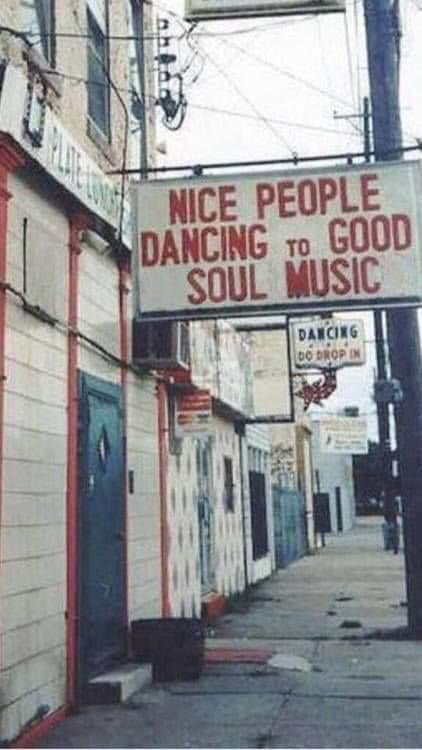
Northern Soul

How 60s American soul shaped 70s Working Class Britain 

In an interview with Mojo Magazine in 2012, DJ, anarchist, former Motown rep and record shop owner Dave Godin explained how he coined the term ‘Northern Soul’.  In the interview  he mentioned how he first mentioned it in his column in Blues and Soul in 1970, he told how;

“I had started to notice that northern football fans who were in London to follow their team were coming into the store to buy records, but they weren’t interested in the latest developments in the black American chart. I devised the name as a shorthand sales term. It was just to say ‘if you’ve got customers from the north, don’t waste time playing them records currently in the U.S. black chart, just play them what they like”

Northern Soul

The change and the splits within Mods in the late 60’s into the ‘Hard Mods’ (who later became skinheads which is a story in itself) and the more psychedelic strains of the Mod world that embraced as more hippy culture could only mean one thing; change. The more flower power stylings that came out of Mod, found, unsurprisingly, little echo in the grim northern industrial towns of cities. They still wanted the speed fuelled dance culture that had started in the Mod clubs of London. As Dave Godin mentioned when Northern lads and lasses came home from London, after football, work and visits, bringing the music they heard in the south. The world was just about to change for thousands of young working class men and women.

 From that moment in June 1970 the musical phenomenon that was sweeping clubs and dance halls in working class northern towns had a name, though those who loved the music and scene referred to it as ‘rare soul;. For hundreds and thousands of working class, men and women, steelworkers, miners, truck drivers, shop workers, engineers, machinists and office workers the lesser known songs sung by lesser known black soul singers from 60’s America was the perfect antidote to the grim  realities of their all too often hum drum working class lives. For many the televisions they watched were still black and white but the colour was provided by the uplifting tunes of Detroit and American soul music. Records from singers such as Tommy Hunt, Erma Franklin ( Aretha’s sister), Darrell Banks Gene Chandler, Nolan Porter and Frances Nero, none of whom were big names on the US soul scene, were being lapped up by an overwhelmingly white working class audience. 

 Not for them the well produced and glittery sounds of the charts, not for them the over produced singers and bands on Top of the Pops. Not for them the old habits of a night out in the working mens club with a musical turn, a comedian, and the same faces you went to school with and your parents went to school with. These working class kids wanted something of their own, not their parents.

  For them it was the often tragic lyrics sung over an uplifting 4/4 soul beat that carried the pain of loss to an almost joyous crescendo. Never before had heartache, sadness and relationships ending sounded so good and loved. Long before the techno/acid house generation were revelling in their illegal and legal all night raves – which they mistakenly believed they started the northern soul all nighter, which itself was the child of the modernist drug fuelled nights of the 60’s. The unknown and near lost voices of urban, mainly black, America was being championed by overwhelmingly white working class kids and their mates. Gone was the self-conscious blokes dancing and feeling they had to dance with their wife/partner. The sheer joy of the records gave those men the confidence and desire to dance, peacocks  with their clothes as sharp as they could pay for they dancing like no one was watching, with a little extra exhilaration provided by illicit drugs whether slimming pills or uppers, ie amphetamine, procured legally or illegally from a chemist.

 Within a few years clubs such as the Golden Torch in Stoke-on-Trent, The Blackpool Mecca, Manchesters Twisted Wheel (which my family had a small interest in) and then latterly world famous Wigan Casino were making their mark on the lives of working class of the UK. In fact by 1976 Wigan Casino had 100,000 members, and 2 years later it was voted the worlds best disco by Billboard magazine, Not bad for a weekly all nighter in a club in the industrial northern town of Wigan, but it as the music that made it. Soul music, is as someone once said ‘The rhythm of the working class’ and it was amongst a section of the working-class that the music took off. 

 For many is was the best bit of the weekend, for many the music sung by some of the lesser known motown and soul artists of 60’s America was the perfect way to be lifted up and out of the grit and grime of Industrial 1970s small town England (and Scotland and Wales). Very soon such was the growth of Northern Soul that TV started to take an interest This England, a TV documentary about the Wigan Casino, was filmed in 1977, apparently had 20 million viewers and is still worth a watch: . In 2014  when the documentary Living for the weekend was aired the northern soul scene was not only still breathing but high kicking and screaming back like a speed fuelled echo of the past. The music that gripped working class kids in the early 70s was as loud and as loved as it always was and hopefully always will be. And gets miserable old 50 somethings like me on the dance floor in a way no other music has ever got me. Do I love you? Indeed I do…..

This England 1977

 https://www.youtube.com/watch?v=5pQt1Bbhm84

Living for the weekend 2014 (part one) 

https://www.youtube.com/watch?v=5pQt1Bbhm84 

Living for the weekend 2014 (part two)

 https://www.youtube.com/watch?v=Zuie1MRWjec

By Mairtin Gardner, 50 something ex skinhead, northern soul and reggae fan, with a soft spot for Celtic.

You can read more Ungagged Writing here or hear a range of left views on our podcast

Design a site like this with WordPress.com
Get started