Weesht For Indy – Not…

Weesht For Indy – Not…

I am part of a political group that agrees to disagree on pretty much all of the razors of political analysis that cause splits, tantrums and forked tongued statements.  Ungagged is a website and political podcast that has pretty much every left view somewhere in its archive, said by people ranging from Trotskyists, Tankies, Blairites, Anarchists, Greens, Nationalists – all from the left spectrum of politics.

We respect the fact that others going to sometimes say, organise or promote an aspect of left politics we don’t agree with on the podcast, or written on the website.  And the fact that quite a few of us are from different parts of the world with different experiences, or different parts of Britain and Ireland, with different experiences, or different parts of Scotland with different experiences, informs us, rather than divides us.

My political background is as complex as anyone’s, but to summarise it, I was brought up in Northern Ireland in a protestant/unionist community and found myself at odds with that community.  I read literature and had experiences in Northern Ireland that convinced me the UK was not conducive to equality – in any way or aspect – and when i moved to Scotland I became involved with left and pro-independence politics.  I was a member of the SSP EC in the late 2000’s; co-opted again during indyref, and elected again onto the EC, twice. I left the SSP in late 2015.

I don’t see independence as a tactic.  I don’t see independence as being about my identity.  I don’t see independence as an income stream. I see independence as a way to break a state that at present is reinventing its imperialist past as somehow glorious – a state that is “dripping with blood from head to foot.” A state that is a key block, still even in its weakened state, in the curtain wall of capitalism.  A wall that hems in the poor and working class, while the rich and corporate world can fly free, borne on wings built with our bones, fueled by our blood and fed to obesity while we starve.

So…

There is an attitude in the Yes movement at present of, “disagreement is not healthy,” or “don’t challenge people – we are all on the same side.” I loathe that. That is nonsense, and designed to shut down debate, just as those on the left who prevaricate and hide the analysis they share within their particular cult shut down debate.

In order to come to agreement as to what sort of Scotland we are fighting for, we have to disagree, hone our arguments etc. Thesis, antithesis, synthesis.  And both those who tell us to shoosh for Indy, and those who hide their true analysis and hide behind their moderately successful tactic of the past independence referendum are, mistakenly in my opinion, really doing their best to stop education through engagement.  They are building walls to a synthesis of feet on the streets, together, during the next campaign.

“Shoosh for indy,” seems to be the order of the day, not “unite the diversity,” though many of those telling us to wheest cry, “why is the movement not as accepting of difference as it was between 2011-14?” and,  “Why cant we all just raise a flag of truce and deliver a saltire to each door?”

I strongly disagree with some people who want independence, or those who at this juncture feel it is “a good tactic.” I strongly agree with some others.

Some I disagree with, I would trust with my life. Some who seem to “agree with me,” I really trust no more than crocodiles resting just below the water.

And this attitude is coming from all sides. If you criticise the ultra nationalists careering around social media, expect to be trolled. Raise points about people making money (rather than raising funds for expenses) from independence, and you are a traitor. And criticise some of the left “analysis” and you are accused of all sorts.  Let’s not, however class all of those we disagree with in the same category. For example, I have recently seen criticism of Darren McGarvey after his interview with Owen Jones. I don’t entirely agree with Darren, but I totally respect the guy (I honestly went from a position were I didn’t rate him, to once having met him, perhaps “getting him,” to now feeling, as a teacher concerned with ACES, the guy is pretty cool). He is absolutely honest in what he is saying… Which is where I get annoyed by some other folk who write about or speak about, independence or social change or socialism -their hiding behind words and “analysis,” as if those words and analysis are objective and self evident. Hiding behind analysis as “objective,” is deceiving (and in some cases this is exactly what the writers and speakers intend). All analysis is subjective. Darren never pretends his writing or words are anything other than his opinion or experience.

The pretence at objectivity from left individuals and small organisations is breathtaking.  And the pretence that what some of them are doing is for the common good is just damned depressing.  The narcissism of some just makes me want to run as far away from some of the left in the independence movement, but Scotland an the independence media being so small, they seem to be everywhere.

The great thing about the Yes movement between 2011 and 2014 is that it was allowed to shift and expand and then it took on a life outside the original Yes Scotland “diversity plan.” After September ‘14, there were statements and manifestos drawn up in our name, without our input; read out in halls and we were all expected to cheer.

I am a democratic radical socialist. And I am not part of a cadre or vanguard or group with vested interests in how the campaign takes shape and is run. I have always, within the movement and when I was in a political party, spoke my mind and called out dishonesty and worse.

I, like many, have views about what should happen post indyref. And I, like many, have views on how we should as campaigners and activists, be represented in the press, and on political bodies growing up within the movement. And at the moment there are far too many self appointed spokespeople for me. Few of whom speak for a movement of butterflies, and a majority of whom seem to want to stick the butterflies in boxes and tell them to shoosh for unity etc. while they tell us what to think.

To argue, to disagree and to call out tactics and vanguards and manels and pyramid schemes seems to cause great ire.

The people who do are the ones I trust.
Brian Finlay Writing

IMG_20180306_195252
Brian Finlay


News, Articles and Opinion


We don’t need a monument of Margaret Thatcher…..we’re standing in one

IMG_20180306_195252
Brian Finlay
This article originally appeared on Brian’s blog

We don’t need a monument of Margaret Thatcher…..we’re standing in one

A nation of powerless workers and inequality


The name Margaret Thatcher is one that resonates with more or less every single person the UK. It is met with scoffing or near hatred by most working class and a sense of pride and ‘Britishness’ with others. The connotations of the stern and confident female leader is enough to make any Conservative Party supporter weak an the knees and think of the good old days. The days when LGBTIQ+ rights in the classroom were silenced and we used excessive force against Argentinian navy ships to install British pride. Let’s face it, they’re certainly not getting the Iron Lady 2 with Theresa May who is as strong and stable as mercury at room temperature but just as ‘likeable’ to the majority of the working class.


The discussion of having a statue of Thatcher erected outside Westminster has gone on for sometime now. It seems to have surfaced again more recently with supporters across the political spectrum. I understand she was the first female Prime Minister but I don’t feel that justifies being set in stone, or in iron with a large swinging handbag as some doting commentators have joked, especially since we are all standing on the monument to Thatcherism. We stand in country with a welfare state that is being decimated, bureaucratically alienated from it’s users and stigmatised by the right wing press and the ‘just about managing’.


We live in a country with a shameful social housing sector which was sold off for state profit with Maggie’s ‘vote winning’ right to buy scheme. Yes this allowed many working class people to own a property but it has residualised social housing and saw the decline of the desire-ability of housing estates once sought after under state ownership. I could go on and on about other ideological policies that inflicted harm on the working class people of the UK in the 1980’s but discussing the Poll Tax needs it’s own blog or political essay.


When Thatcher came into power in 1979 she had won to fight the unions. The ‘winter of discontent’ had triggered a political shift to Conservatism and she brought her ‘traditional school teacher’ attitude to politics. A strong woman ‘of the people’ to take on the male domination of Trade Unions who were, in Thatcher’s opinion, scuppering the UK’s productivity and holding public services to ransom. The planned and aggressive butchering of trade union rights through the plethora of legislation passed transformed employment relations in this country. Simultaneously her government went on to sell off public utilities including coal mining, gas providers and water.

The ideological assumption was that a competitive market would improve service delivery, keep costs down and the productivity in these industries would be improved; look how that has worked out. This was a turbulent time for manufacturing as a whole and the working class communities right across the country. The miner strike of 1983/84 is a prominent memory and artefact in history of how aggressive and ideological Thatcher’s regime was in empowering employers and weakening trade unions and the employees. This whole period of time could be, and actually has, it’s own textbook but fast forward to today we see that ideology played out in favour of Thatcher. The neo-liberal agenda and quest for a free unregulated market was not accidental and was not halted or minimised under 13 years of a New Labour government.


Today where huge industrial estates and other hard industry once stood we see retail parks and leisure parks. Where small independent businesses used to occupy our high streets we see national and multi-national chain corporations occupy those sites which still remain open. In Scotland around 25% of the working population work in the service sector including retail, sales or hospitality. Just under ten percent of Scot’s work in hotels or restaurants. Traditionally the vast majority Scottish workforce was employed in manufacturing, production, energy extraction or manual labour. Some commentators assert the reduction in this type of work is because much more women are now in the workplace, which takes up just over 40% of the today’s workforce, but this is down to the decimation of industry which is echoed in areas like Northern England and parts of Wales.


This is significant because service sector workers tend not to have collective representation or be represented by trade unions; hindering their bargaining power with employers. In fact unions in the UK have seen membership decline massively and only have ‘real’ authority remaining within the public sector. However, public sector trade unions are under attack from Theresa May’s government with the austerity lead public sector pay cap weakening the only strong remaining trade union movement in the UK. In the UK’s service sector is where we see some of the lowest wages, precarious working conditions and low skilled repetitive work. Many of these jobs have face-to-face customer interaction 100% of the time which exposes the employee to high levels of exhausting emotional labour which can lead to burnout.


The precarious types of employment can manifest in zero hour contracts (ZHC) or as ‘self-employed’ style of working with a central employer; referred to as the ‘gig-economy’. If an employee is on a ZHC have no guaranteed amount of working hours per week from their employer. This gives the employer the ability to have the manpower when it is required but scale down and not have pay employees when they’re not needed. This can also make it possible for employers to stop giving hours to employees that don’t ‘fit’ or don’t produce high levels of productivity. Having hours cut or removed completely is common if a staff member is ‘problematic’ or seen to be a trouble maker; meaning the employer holds nearly all the power. This type of working conditions are expected in retail and hospitality and becoming more and more normalised and widely accepted as ‘how it is’ these days. Employees with limited influence or power can do very little and as these jobs are relatively low skilled a disgruntled employee can be replaced relatively easily and quickly.


The gig-economy is a self-employed type of working arrangement with a single employer. This means you’re a worker for that employer but not an employee of them meaning you don’t receive all the same benefits or rights as employees. This is common in the growing courier companies, such as DHL and Hermes, where employees must rent their vehicle, uniforms or even buy the fuel for delivering the parcels. This model of employment is also present in companies such as the taxi firm Uber. This manifests by an app providing drivers with the customer pick ups and have they have their service scored and graded by the customer. The employee can also be monitored centrally by management to ensure their productivity, working hours and even levels of customer service are above targets; set by management. What we now see in the new employment age is employees being controlled by an app on their phone which they require to utilise to gain access to work. The Conservative Government ‘investigated’ these types of employment practices and recently imposed these employees must receive the National ‘Living’ Wage and be entitled to annual leave but they did not address the core issues of power, control and the really precarious nature of the job. In companies that adopt the gig-economy model can revoke the offer of work for that day with no notice or state they are not meeting the required standard of work and not offer work going forward. This cuts out the very lengthy performance management procedure and prevents the employer being taken to tribunal.

These two common manifestations of precarious work have installed uncertainty, in-work poverty and further job degradation and deskilling. The jobs are designed to be as simplified and controlled as possible, often by technology as the first contact ‘line manager’, resulting very little autonomy. It is known that job satisfaction and organisational commitment predominantly comes from autonomous flexible work but in the precarious age of work it’s more profitable to have de skilled, repetitive and highly controlled types of job roles.


So what has this created? What does it have to do with Margaret Thatcher? The answer is a nation of powerless workers and the employer holding most, if not all, of the power. The precarious and low paid jobs occupied by a chunk of the Scottish workforce result in employees essentially being trapped in in-work poverty and uncertain financial position due to having no employment security. In the hospitality sector, where less than 2% of the workforce has trade union membership, this is the kind of working practices that are on offer. In our contemporary labour market, which is amongst the most unequal in the ‘developed’ world, we see cases of CEO’s being paid 125 times more than junior member of staff. We see the need and utilisation of foodbanks increase every month due to in-work poverty and the implementation of the heartless Universal Credit welfare reforms. This is extreme Thatcherism. An unregulated employment market free from collective bargaining and trade union interference. We all live and work in the monument sculpted by Thatcher’s governments ideological ideals, and this monument has been embellished by New Labour and Coalition/Conservative governments that served after her. We don’t need reminded by a glorified statue outside the Palace of Westminster because we are reminded everyday. Reminded that in the sixth largest economy in the world the wealth inequality is scandalous and it is an eye sore. Let’s look at building on that rather than fawning after a Prime Minister that inflicted such social harm on the people she was elected to represent.

Brian Finlay

IMG_20180306_195252
Brian Finlay


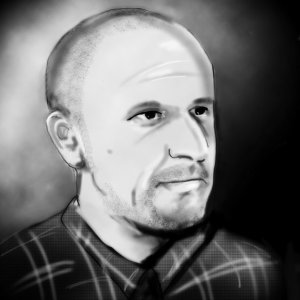
Brian Finlay is the youngest son of a restaurant manager and council housing administrator. He was brought up in a pretty apolitical household where politics and policy were very rarely discussed. His hard working parents provided a lot of support, love and a very happy upbringing; so much so they’re Brian’s best friends as an adult.

Brian was born and raised in Hallglen in Falkirk and stayed there until he moved to Edinburgh at the age of eighteen and then to London one year later. He worked as a fashion retail manager for Topshop/Topman in various branches across London and Scotland prior to his moving away in 2005. Brian enjoyed the life in London and excelled in his career at a very early age but decided to return home to Scotland in 2011 to be closer to his family. It was then he decided to return to education after an eleven year gap and had always been in his thoughts and more overtly encouraged by his parents.

He attended Forth Valley College to gain entry level HNC and under took a BA (Hons) in Human Resource Management and successfully secured a first. It was during the time of his critical studies of employment practices and policy he became interested in politics. This interest was intensified during the Scottish Independence Referendum when he had to question, for the first time, what his core beliefs were and what he felt was the best for the country and society. During his studies he met his partner Glen, and Brian moved to Rutherglen in 2014 to live with him.

After backing a yes vote and the disappointment of the outcome he briefly joined the Scottish Socialist Party but left just one year later after feeling more aligned to the Scottish Green Party in early 2016. Moreover, since then he campaigned in many elections and even stood as a Scottish Green Party candidate in May 2017 Council Elections and a local by-election in November 2017.

Brian’s passion for writing came apparent during his studies. He overcame issues with his writing ability, grammar and was even encouraged to be tested for dyslexia. He, being tenacious, decided not to take the test and attempted to manage it himself and did so through his academic assignment feedback and writing in bi-weekly letters in The National newspaper. He had to stop writing for pleasure so much during the first semester of his MSc in Human Resource Management, at Strathclyde Business School, due to the intensity of work but finally started his #LeftyInABusinessSchool blog in January of this year. His future aspirations include taking on a PhD research project based around precarious work, becoming an academic and having an opinion column in a national newspaper.

In his very limited spare time Brian likes to write opinion pieces for his blog, travel on adventures around Scotland with Glen and go on international holidays to get some winter sun and relax. He is a proud vegetarian, and even enjoys Sunday morning political show and watching Question Time. He likes the quiet life after his party London lifestyle and enjoys nothing more than reading the paper on a day and drinking a glass of red and chilling at night.

Brian also loves a twitter duel with a Tory.

You can follow him on Twitter

Or his blog’s Facebook page: Left in a Business School

Or read more on his blog

Where’s the Alternative?

image1
Alan Grogan, Labour for Independence co-founder


As another national election occurs, with it comes another frustrating choice for the electorate. The choice between an increasingly incompetent establishment, or ‘radical’ alternatives like the anti-vax Luigi Di Maio or anti-immigrant Northern League. Perhaps most worryingly is the kingmaker appearing to still be corrupt 81 year old Berlusconi, who seems to be supporting Salvini’s Northern League.
This follows a worrying trend throughout the western world recently where the choice is between the status quo; which has brought on a prolonged period of austerity and deprivation for the poorest in society by cosying up to big business and the bankers who brought on a recession, or the far-right, which gains credence by blaming all societies ills on immigration, and promoting themselves as radical change and anti-establishment, despite their ties to big business and a media moving further to the right to bolster declining sales.
In France many were asked to hold their nose to vote for Macron to prevent the ascension of Marine Le Pen. The choice between Cartoonish Trump and Hilary Clinton should have been straight forward but her ties to previous administrations and big business made Trump seem more appealing to a population where most had yet to see any positive change in their declining living standards over the past decade.

Bernie Sanders appealed as a real alternative, much like Jeremy Corbyn in the UK, but only in the right-wing papers of Wall Street Journal and the Daily Mail would their agenda be seen as radical or dangerous. At most they offer a social democratic alternative that would seem perfectly normal and decent in most civilised nations as seen in Scandinavia.
Corbyn and Sanders both have good intentions and rightly highlight the inequality that is seeping through society in most western nations at present. Yet their solutions very rarely extend beyond Bennite thinking which is almost 40 years old, and hardly reflects the current issues and decisions that need to be addressed to improve nations. Little is offered in way of solutions to the oncoming 4th revolution or how to deal with an aging population, climate change or moving forward an economy into the 21st century.
The biggest question that the Italian election again promotes is what has happened to the left in all of this? Why is it that while the right and far right have been able to take on the mantra of radical and anti-establishment, those on the left have gone quiet?

It seems to me that those on the left are always 3 steps behind. They oppose the election of Trump, they oppose fascist governments, they oppose those who attack multi-culturalism and diversity. All of this is correct and proper, but in this opposition, they have found themselves perpetually reacting to an agenda rather than setting one.

It seems far easier to dismiss a supporter of Trump or UKIP or the Northern League as mere racists or fascist rather than understand their votes and views are based on fear for their own future and their families. These fears have been exploited mainly because there are no other real alternatives given than the right wing.
My view of the left, in my own experiences and from looking to other nations is that the left are so unprepared for government that it no longer attempts to produce the intellectual thinking that allow it to create radical alternatives. It is so obsessed with reuniting the left that it allows the smallest of groups in the far left to dictate unworkable policy. That it is still so obsessed with a revolution over 100 years ago which ultimately failed in creating a better society, that it still splinters into factions of totalitarian despot and another who if he had the chance would have done the same.
A real alternative is needed for people unhappy at the current system, desperate for change, clinging on to reasons based on immigration and race that in their own minds probably doesn’t add up, but no one else seems willing to give them an alternative.

Something needs to be done, or else governments in all nations will be plagued with authoritarian right wing agendas, while all the left will be able to do is vote for the lesser of two evils.


Come the Day…

Available FREE on iTunes and Podbean

On this episode of Ungagged, introduced by Neil Scott, Graham Campbell talks about the Rethinking Race conference in Glasgow, Victoria Pearson reminds us that hope is apathy’s twin sister if it isnt backed up with action, and George Collins  talks about how children are citizens now, not citizens in waiting, and they deserve to have that recognised in the education system, as well as wider society.

At the request of his daughter Zoe, Derek Stewart Macpherson reads The Ones Who Walk Away From Omelas, Paul Quigley of the FAC tells us why he cofounded the campaign against the Offensive Behaviour in Football Act, and Chuck Hamilton, will be talking Star Trek: Deep Space Nine, free thought (or not) in regards religion, and Marx. They are linked, we promise!

We will have an update on Jagtar Singh Johal, the Scottish man being detained in India from Damanvir Kaur, Debra Torrance* will give us her prediction of our situation come the day of Brexit, and Teresa Durran shares her poems Resurgum 1 and 2.

Catriona Stevenson, talks about the Glencoe Massacre,  Thomas Morris asks if, when times are tough, it is better to leave “your” country, or stay and fight to make it better, and our Red Raiph talks about whit can go wrang when you give someone a job for life.


With music from: Andrea Heins, Argonaut, Gallo Rojo, Girobabies, Husky Tones, Joe Solo, Kes’ ConscienceThunder on the Left,  Babel fish Project, The Hurriers, The Kara Sea.

Screenshot_20180213-220540.jpg

Edited, produced and sworn at by Neil ScottNeil Anderson and Victoria Pearson

Get yourself Ungagged and let us know what you think of this episode in the comments, or on our twitterFacebook or our new YouTube Channel.


* Debra references two video clips in her piece, a piece from RT on the Brexit transition, and an interview on Good Morning Britain.

Ungagged is a not for profit collective of volunteers, and we rely on the generosity of our listeners to meet hosting and advertising costs, as well as help us fund the campaigns on our news page. If you’d like to donate us the cost of a newspaper or a cup of coffee to help keep us going, you can do so through PayPal here.


Plastic Pleurisy

So I stumbled across a twitter thread today, quite innocuous but linked to a vital and important issue. Plastic straws. Now I know we have all seen that awful video of the poor turtle with the straw up his nose, but in case you haven’t…
Here at ungagged we try really hard to support all environmental campaigns, and reducing plastics in our oceans is just one of the many causes we ran on our activist advent calendar. I personally recycle as much as I can and try to ensure I buy products with environmentally friendly packaging when I can. We have 5 recycling bins including a food waste bin, as I suspect many of you guys have at home too.
It was recently suggested we would have to increase our recycling capabilities as we brexited the European Union, so it’s no surprise that the government has encouraged companies trying to cut down on unnecessary plastic products across the board.
One of these very admirable moves include banning plastic cotton buds. Replacing them with a biodegradable paper poled cotton bud. The other announcement was from multiple retailers and companies themselves, the banning of plastic straws.
Following the news that Scotland intends to ban single use plastic straws by the end of 2019, several restaurants were keen to tweet that they were ahead of the curve
20180212_220027
 20180212_220046
There is a campaign called The Final Straw Scotland and there’s a video you can see here…
Now, I really don’t have a problem with companies restricting the amount of straws they stock, I don’t even have a problem with biodegradable alternatives that work. What I object to is being told, as a disabled person who regularly needs a straw to be able to drink, that I can buy my own metal alternative or the company supply a reusable washed one.
Oh. My. Gods! Yukkers *vom emoji* 🤢🤮


So first off, never mind the blatantly obvious fact some disabled folk have upper limb impairment which means it can be difficult to hold cups and glasses. Yes we usually have our own drinks container, often with special handles or grips and built in straws, but most of the time the straw has 3 day old water in it or some disgusting electrolyte powder residue from that time you had the skits. And like we are all aware some disabled folk are more prone to disease and infection, and myself having an autoimmune disorder, I don’t really fancy drinking out a “washed”, “communal” straw. I’ve seen dishwashers in bars.
Now the tone of this article is gonna drastically change. If you cant interpret the point I’m digging at then I probably can’t help you past this stage.
  • Numero uno!

Before you comment on why doesn’t a disabled person just buy a metal or wooden straw, or use a paper straw, answer this. Do you have one of those bamboo toothbrushes? Have you recently measured the mould growth? Do you carry around your own cutlery EVERY time you grab a coffee? Oh you don’t use a straw to drink hot drinks? That’ll be why you think paper straws are the perfect solution.

  • B)

99% of my mobility aids contains some sort of plastic. My wheelchair has plastic trim, my crutches half plastic. I have a plastic pirate themed orthotic brace for my foot. I have a plastic bath seat. I have a plastic toilet stool (not my stool, that’s organic. Hashtag: poo emoji 💩)I have a plastic gripper grabber, plastic fans, plastic pads, plastic sheets (sometimes). You cannot plastic guilt trip a disabled person. Most of our furniture is plastic. It’s not a style choice like some funky 70’s LA interior design magazine or hipster Bakelite revival.

received_10210744209750105
Not a hipster fashion item
  • Section iii.)

Telling a disabled person they can carry a straw about with them or trying to tell them how they can best adapt to their own disabilities, is a bit fucking stupid. No one know’s a disabled person’s capabilities and adaptabilities better than the disabled person themselves, or their primary carer. Swallowing can be an issue for some disabled people. People with physical disabilities and mental/neuro disorders alike. Just cos you have a granny with arthritis doesn’t mean you know what’s best for Tam’s C1 spinal cord injury and resulting impairment. With all your best intentions, just gonnae no?

  • Part IV)

A disabled person most likely has a kit, a bug out bag if you will. I have medicine, patches, pads, a tool kit, a water bottle (aforementioned star wars container with Jedi grip), spare clothes, waterproofs, a hand pump, and a scarf (to double as a blanket) all in the back of my wheelchair. I also have to remember my phone, my wallet, my disabled parking badge, my crutch, my keys, my bag for life and my trolley coin token thing cos there is no way I have a pound coin cash, and you want me to remember to take a straw so you feel better about the banning of plastics? No bother I’ll just die of thirst in the supermarket queue while the lassie helps to pack my 20 PLASTIC bags for life. Not only does remembering such a shitload of stuff impact my cognitive issues, it can be stressful and expensive.

Remembering a wee straw might not seem like a big deal, especially if it’s something you need. It might not even seem expensive. Buy a multipack from the pound shop eh? But when being disabled is already costing a premium, and putting barriers in way of our independence, a small insignificant drinking tube seems trivial. But when you sometimes have to ask for a key to the toilet, plead for access to a ramp, be reassessed on congenital and progressive disorders, a wee straw feels like the final straw.
  • Lastly;

please don’t take this article too seriously. If you want to find out more please go check out the amazing work @jamieszymko is doing in highlighting the issue.

Please don’t be an ableist jerk and think before you tweet.
And please don’t get me started on the issue of pre-chopped vegetables. That involves knives. *angry emoji* 😡
Get in touch, get ungagged! @_Ungagged

Brexit, Referendums and Independence

IMG_20180124_114756
Martin MacDonald

When I started writing this on 05/02/2018 the idea of a hard Brexit, an exit with no withdrawal agreement seemed possible but remote. In the light of the UK’s insistence this week that the UK will leave both the Single Market and the Customs Union and Michael Barnier’s insistence today (09/02/2018) that an open UK/Irish border must be written into the withdrawal agreement then the odds of it happening have dropped. The UK/Irish border can’t be open if the UK is not in the Customs Union and the Single Market and the DUP, whom the Tories depend on to survive in the Commons, will never allow an internal trade border in the Irish Sea. However there is a solution. The UK can solve the problem of a Brexit withdrawal agreement which is impossible under their Brexit plan by the simple trick of not having a withdrawal agreement. In which case there will be a hard Brexit where the UK leaves abruptly with no transition and no trade deal on the 29th of March 2019.


If the UK leaves with no withdrawal agreement then there will be no transition period or framework for future trade deals and in fact it may lead to no vote in the House of Commons on a withdrawal deal because there will be no deal to vote on.


The withdrawal vote scenario I’ve written about below may not come to pass. But assuming there will be an agreement here goes.


When politicians talk about voting in Parliament on the final Brexit deal what is that they will vote on? From the press the impression given is that the parliamentary vote will be on the details of the UK’s new trade deal with the EU after Brexit but in fact they will be voting on something very different when it comes to a vote in Parliament.


In the Brexit Bill it says this:

“A Minister of the Crown may by regulations make such provision as the Minister considers appropriate for the purposes of implementing the withdrawal agreement if the Minister considers that such provision should be in force on or before exit day, subject to the prior enactment of a statute by Parliament approving the final terms of withdrawal of the United Kingdom from the European Union.”

Brexit Bill


That key phrase is “final terms of withdrawal” in the last sentence. It’s not a trade deal which will be voted on in Parliament, it’s how the UK exits the EU under Article 50 of the Lisbon Treaty. Under Article 50 the EU and the UK sign up to a negotiated exit from the EU, dotting the i’s and crossing the t’s, taking into account items such as the settlement of budget accounts, withdrawal from EU institutions, rights of EU citizens in the UK (and vice versa) and the transition arrangements to smooth out the UK leaving the EU. It also provides in Article 50 that all the negotiated items of withdrawal will take into account the framework for the UK’s future relationship with the EU. However a framework is not a trade deal or anything like it and it can be likened to an agreed agenda. It’s the agenda of trade areas where the UK and EU are willing to negotiate once the UK has left the EU and where the UK is treated as a third party outside the EU and almost certainly outside the Single Market and the Customs Union.


So the UK Parliament will be voting on one package which contains three things, the withdrawal agreement, the transitional arrangements and the agenda for future negotiations once Brexit has been completed, aka the framework.


This ensures that it will be a Hobson’s Choice vote. To vote Yes legitimises the Government’s Brexit vision of a UK outside the Single Market and Customs Union but to vote No throws out not only the agenda for a future trade deal but also the withdrawal agreement and the transitional arrangements which means a very hard exit indeed unless the EU can be persuaded to extend Article 50 and the UK Government can be persuaded to change their Brexit stance in new negotiations. Just because the UK doesn’t accept the withdrawal deal doesn’t stop the Article 50 clock.


That’s the way the Government has set up the vote as David Jones, Minister of State for the Department for Exiting the European Union said in the House of Commons on 7th of February 2017.

“I think that I have already answered that extremely clearly. There will be a meaningful vote. The vote will be either to accept the deal that the Government will have achieved—I repeat that the process of negotiation will not be without frequent reports to the House—or for there to be no deal. Frankly, that is the choice that the House will have to make. That will be the most meaningful vote that one could imagine.”

Hansard


So can’t the UK go back and re-negotiate if it rejects the withdrawal arrangements or even stop Brexit if by some chance the agreement gets rejected? Things get tricky here. First of all there’s no time left to renegotiate under the Article 50 time limit. The final withdrawal arrangements are planned to be completed by October 2018 giving time for the European Parliament and the European council to consider and approve them before March 2019 when the two years allowed under Article 50 run out. The whole point of the time-limit on Article 50 was to stop endless negotiations with their accompanying disruptions and uncertainty. Article 50 can be extended but it would need the unanimous agreement of all 27 EU member states to do it.


Rejecting the final withdrawal agreement would need the EU to be willing to extend the Article 50 time-limit and renegotiate but that would be pointless unless the anti-Single Market and anti-Customs Union UK Government could be persuaded to change their negotiating stance or simply to give up on Brexit. However there is no guarantee the Conservative Government will do either or if stopping Brexit can be done unilaterally.


The proposed solution coming from groups like the one lead by Labour MP Chuka Umunna is to bypass the vote in the UK Parliament and hold another EU referendum where the UK electorate vote on whether the UK Brexits on the negotiated withdrawal, transition and trade framework, (again, remember the framework is just an agenda for negotiation), or just forgets it all and stays in the EU.


A very simple, clean idea and potentially very bad for Scotland.


Now coming from someone who voted remain and believes that Scotland is better off in the EU that sounds very odd, however there are some very good reasons to say it is a bad idea.


The chance of a second EU referendum happening is very low as it would need enough Labour and Tory rebels to win a vote in Westminster and both Tory and Labour are Brexit parties. However, even if just the idea got traction and especially if it got SNP backing, then the idea that you hold a first referendum on the principle of a proposal and then a second referendum on the detail would become mainstream whether it happens or not.


This isn’t the first time the idea of a first referendum on the principle and then a second referendum on the detail has been proposed. When the Scottish independence referendum was held in Scotland the idea of two referendums was floated in 2011 by Professor Vernon Bogdanor,

“Therefore, in my opinion, a referendum giving the Scottish government authority to start negotiations needs to be complemented by a referendum at the end of the negotiations to confirm that Scots want independence on the terms achieved.”

Vernon Bogdanor


and by Michael Moore the Scottish Secretary,

“If we have an advisory referendum set up by the Scottish government, I think it is a strong likelihood, and it is certainly my personal view, that you would need a second referendum on the formalities of agreeing what has been sorted out between the governments.”

Michael Moore


The idea that any Scottish independence referendum should be followed by a referendum on the settlement between Scotland and the rUK would be very dangerous to the independence cause and if the SNP support a second EU referendum very difficult for them to reject. A two referendum scenario would require the unionists to win only once but the nationalists would have to win twice to achieve victory. If Yes won the first referendum then the pressure on the rUK side of the negotiating team to create the worst possible separation agreement would be immense in order to ensure that No would win the second referendum on the deal.


Independence with full membership of the EU is Scotland’s best option and promoting a second EU referendum makes that much more difficult to achieve. Even if there were calls for one there’s no guarantee that a second EU referendum would happen or that given the current polling of the Tory party that the remainers would win it and even the proposal would certainly fuel the demands for a two referendum decision on Scottish independence. If Parliament feels that staying in the EU is the best option then they should call a snap General Election and the parties should fight it out on platforms of Leave or Remain.


Brexit has given impetus to a second independence referendum much sooner than many people thought possible but how will it affect the way people vote? To be brutally honest it won’t, not until the effects of Brexit really start to hit after March 2019. For most of the No vote in 2014 nothing has really changed, it’s Brexit on the telly, pound up and down, the UK and the rest of the EU facing off as usual in the press, squabbles in the Government, almost the usual mundane, background noise of politics in the UK.


At the moment it’s a phony war where the UK is still in the EU with all the trade and free movement perks that brings and although the political geeks like me talk and speculate about the future effects of Brexit they haven’t happened yet. There are forerunners, lack of migrant agricultural workers, corporations planning moves to inside the EU, corporations holding back on investment, universities finding that nobody in the rest of the EU wants them as research partners as the deadline to Brexit approaches but it’s just smoke in the wind for most of the population. The problems of travel, having to get and pay for visas to travel to Europe, customs duties on goods, perishable export goods piling up at jam-packed ports, companies leaving, price increases, job losses, no CAP payments for agriculture and import quotas on seafood into the EU haven’t hit yet because despite all the Brexit talk we’re still inside the EU.


Brexit will have a big effect on the next Scottish independence referendum but not until Brexit happens and its effects become real. (Effects which will happen very quickly if there is no withdrawal agreement and no transition.) Once it becomes apparent what’s been lost with Brexit then for the No voters of 2014 who believe in EU membership independence for Scotland becomes the only route back into the EU. There is a big danger that the second independence referendum becomes in effect a second EU referendum in Scotland when it must be much larger in scope than that, looking at all the possibilities in social, industrial and cultural change that independence will bring. However the Better Together fearmongering about loss of EU membership and being isolated will not be possible this time and the choice for Scotland will be to stay as a region in single isolated state or to become an independent state in the world’s biggest trading bloc. In 2014 the EU feared the breakup of a member state and kept out of it, in a second independence referendum they will be looking approvingly at regaining a chunk of what they’ve lost. Brexit has been a blow to the confidence of the EU but regaining an independent Scotland would be for them a recovery of both territory and pride. They will be very encouraging about membership.

Brussels as the epitome of evil, or a scientific socialist approach?

Screenshot_20180209-091117
Written by Joanne Telfer
 I read Jonathon Shafi’s piece in the Independent on the Marxist argument against the EU with interest, but feel it raises more questions that it answers.
Shafi starts off from a very promising declaration:
“In the abstract, the transnationality of the single market fits with left-wing ideals”.
   This is good and very true, but the question is: what does Shafi understand as the distinction between abstract and concrete? Not a great deal it seems, judging by his next sentence:
“Every mass social movement that has laid a national democratic challenge has found itself confronted by the infrastructure of the EU”.

Whilst this is an indisputable fact, it’s not a progression from abstract to concrete in theory (the method of Marx). It’s a juxtaposition of abstract thought with material object. That’s the vulgar distinction of abstract and concrete, which is a legacy of medieval thinking. Under that sort of rationale, the abstract is the musings of mind and concrete is the hard surface of stuff. Two worlds nicely separated from each other, worlds that never meet.

This is not the method of Marx. For Marx, ideas in heads were just as real as physical objects outside those heads, he had no truck with either vulgar materialists or idealists. For Marx, material conditions preceded thought and ultimately dominated it, but the concrete and abstract are not distinct, two world states of existence. For Marx, as was the case in classical Greece, the abstract is abstraction (a sample) and the concrete was the totality of what is real whether this is inert matter or living biological matter, or the products of human labour, either by hand or by brain.


So let’s proceed. You can’t easily raise a polemic against Shafi on the basis of what he says because it isn’t much, but let me try. He cites Yanis Varoufakis which is interesting. Now Varoufakis let me say, is just as much muddled as Shafi is, but in a different way. Y V has direct experience of being on the front line in relation to the EU, in the trenches as it were. Shafi hasn’t as far as I know. I give greater weight therefore to the analysis provided by Y V. Shafi falls down by his abstract concepts, Varoufakis on the other hand, falls down by his abstract solutions.

But

The key to understanding the EU, lies in its political economy and not in its potential to invoke moral outrage. Beneath the surface appearance of neo-liberal ideology, lurks the essence of finance capital, in its leading historical role in modernity. This is something that Y V gets and that Shafi either doesn’t get or ignores. Where I despair with the former Greek Finance minister, is his popular front remedy. Does he know nothing of Spain in the 1930’s? A transnational problem requires a transnational solution. But it has to be built on a class basis, it has to be based on working people across the continent. The ideological fellow travellers from the liberal bourgeoisie and celebrities of conscience will stab such a movement in the back and in the front when the going gets rough.


So what are the perspectives?


Perspectives should be about short term forecasts of future events, based on probability, there are no genuine clairvoyants. The EU referendum was of course, propagated by the remain side to include dire predictions. In reality what happened was that the pound fell in relation to other currencies, significantly but not disastrously, though it has to be said the significance was felt more acutely by the poor rather than the rich. The value of the pound of course, is a speculative matter. The casino nature of capitalism is abstract, by which I mean it’s part of the totality, even though this has concrete repercussions in some people’s lives.


A paper produced by a group calling itself Open Britain, makes interesting reading (2). Of course to be generous, this is a left reformist take on these matters, a business as usual take with a Neo-Keynsian economic bent. But to me it’s a serious consideration of the facts. It’s by no means Blairite bullshit, unless you think all this sort of stuff is conscious conspiracy and everyone we disagree with is a deliberate liar. To me, that’s not a Marxist approach at all. People do lie and people do conspire but the very best lies and the very best conspiracies tend to be closer to the truth or closer to accepted truth, than conspiracy theorists abstractly imagine. The acid test is always to see how concrete (in a Marxist sense) the propositions are.


Frederich Engels gave weight to the importance of the transformation of quantity into quantity and vice versa. In the concrete concept of Brexit, this transition has many answers but the qualitative change is in most instances, significantly negative in a quantitative result. In other words, Brexit will have a negative economic impact under any scenario, at least in the short term. I don’t think that is really a controversial point, what is controversial concerns what happens next.


In the Brexit version of events, British exceptionalism, the abandoned project of empire and commonwealth will be restored to its former glory. The Lexit version of events is of course distinct but abstractly distinct. It’s in heads not connected to bodies and by this I mean there is no plan of action. Its only concrete expression would be in the framework of accelerationism and I’ve heard this articulated. Brexit will bring about the collapse of the EU and shit will get so bad in the UK that workers in their millions will flock to the red flag. This in a sense is a more concrete position than the moral outrage saga of Brussels bad, London good. It is however bad concrete because by analogy it’s the equivalent of throwing shit and sand into the cement mixer rather than sand and cement.


Marx’s idea of accelerationism was to advocate free trade, remove the feudal barriers to the development of capitalism so that the grave diggers of capitalism, the proletariat would grow in strength and numbers. Anything else is just a fantasy of pure idealism. This is well illustrated by Marx’s critique of Hegel’s Philosophy of Right. (3) and his 11th Thesis on Feuerbach (4). Socialism, scientific socialism is not a matter of lighting the blue touch paper and stepping back in the expectation of fireworks, it’s about plotting the course of history and making calculated informed interventions with a coherent strategy, employing the living brain against the dead weight of past generations. This is what Marx means when he says reality must strive towards thought. There is nothing in the Lexit narrative which points to any practical measures that can be taken for the proletariat to benefit from Brexit.


Corbyn to the rescue?


The situation has developed of course since 2016, when I wrote my article on Bosses clubs,  left wing communism and the fantasy of left exit from the EU (5). Cameron resigned and the Tory party shifted to the right under new leadership. The toffs are out and a new layer of not so posh but the rather more radical, petit bourgeois front line arrived with talk of bringing back grammar schools and of May being the new Maggie Thatcher. The UKIP vote collapsed but ostensibly I think kippers feel that their people are now in charge. Rees-Mogg of course (tipped as a possible future leader and bookies favourite at 9:2) is posh but an arch reactionary who once suggested a pact with the Kippers.


The Blairites and various Brownites immediately moved against Corbyn with the backing of most of the PLP but failed to oust him. ‘Maggie’ May, strong and stable, called a surprise election, throwing the SNP strategy into chaos and labour published the most radical manifesto since the seventies. But does this mean we can declare the Brexit referendum a victory for the left? There’s nothing in labour’s 2017 election manifesto that would be impossible under EU rules or under rules which would apply by membership of EFTA.


Labour came a respectable second with the new Tory government, propped up by the reactionary DUP.  Had there been no EU referendum, my guess is that labour would have won. Class issues have been subsumed to a significant extent because of the great debate over the relationship with Europe. The Tories themselves have been so engrossed in the EU question that  they themselves have little energy to devote to domestic issues, so we haven’t really yet seen just how bad for working people this Tory government can become.


Labour also has a long hard journey to significantly shift the public consciousness, after decades of Thatcherism and Blairism. Of course class consciousness has its own momentum  but the Labour party is now trying to restore itself as the mass party of the working class. Brexit gets in the way of this, especially as the NHS and social care, rely on significant numbers of EU migrants. The ones that the Tory right and the Kippers feel so passionately about excluding.


If the outcome of negotiations is WTO rules, which is the way that it’s looking, the there will be economic decline and this will be self-inflicted. This is never a problem for the rich because they simply pass the burden on to the poor. If you own capital, then you can move it to any part of the world that gives you a better return. The much maligned freedom of movement is always available to those with wealth.


If a Labour government comes to power on or before 2022, they will have a huge task on their hands and the worse the ultimate settlement with the EU is, the harder that task will become. No Labour government in the UK has ever put forward a full blooded socialist programme and any future Labour government would need to be pushed by events to even contemplate that. Whilst they may be pushed by events they will also be restrained by their own inertia. Not just their faith in Keynesian economics but the careerists and renegades in their own midst.


An election of a Labour government in the UK would be a positive development, not so much because it would be bound to deliver socialism which it almost certainly would not, but because it shifts the social narrative and puts socialism back on the agenda of possible futures.

Perhaps the accelerationists are right and I am wrong. Perhaps the whip of reaction, falling living standards and brutal nineteenth century capitalism is what we need to wake us all up but my answer to that is that turning class consciousness into political consciousness and revolutionary praxis, is what is possible when a class is moving forward with renewed confidence, not what happens when a class is in retreat, blaming the immigrant or the bureaucrats of Brussels, for what is really a global international class question, concerning the mode of production and its given property relations.

Design a site like this with WordPress.com
Get started