The UN must recognise Palestine’s right to exist, says leading Human Rights Campaigner
Today 136 out of 193 UN member states have formally recognised Palestine. The UK needs to show some leadership and be amongst the first Western European countries to recognise Palestine and its right to self-determination.
British Government already recognises the principle that the Palestinian people have an inalienable right to self-determination but has not granted this officially because it wants to reserve the right to do so at a moment of its choosing to best help bring about peace.
That moment is now. Recognition is a good starting-point for negotiations and would help guarantee that the focus of talks is about how Palestine becomes a viable and secure sovereign state – not whether it becomes one. Denying recognition as the current British government is doing is entirely at odds with the principle of self-determination.
Of course, neither Israel nor Palestine’s right to exist should be subject to veto or any kind of conditions and we must actively challenge any refusal by either side to deny the other’s right to exist. It can be difficult to understand the scale of the human tragedy that is occurring on this narrow strip of land, day in day out. Not just when the camera crews and journalists are there, but every single day.
It’s vital that human rights violations and violence on all sides cease and that the international community take strong action to hold the perpetrators to account.
One of those core causes is the eternal question mark that hangs over Palestine’s right to exist. Recognition would help the process of removing that question mark and allow Israelis and Palestinians to look forward to a future defined by equality, justice, freedom and peace.
In Gaza, entire families sit in the darkness of their living rooms, with candles creating the only light. Thousands of families have lost loved ones in house fires. Gaza’s residents face so much struggle and pain, just to secure one of life’s basic necessities.
Today, if you ask Palestinians in Gaza how they are doing, they might respond: “Alive, due to lack of death.” This commonly used expression captures the misery of everyday life in Gaza.
Every second in Gaza under Israel’s blockade – where water and medical care are luxuries – is tainted by tragedy. Every time a family can’t afford to put food on the table, every time a house fire claims yet another victim, every time a cancer patient can’t acquire life-saving treatment or another desperate human ends their life, the dreadfulness of the blockade comes into full view.
The UN has declared Gaza “unliveable”, and the blockade creates a passive, collective death. What will it take to convince the international community that the people of Palestine, like all humans on this Earth, deserve to live in dignity?
So long as Israel maintains great control over Palestinian lives but denies them their basic rights and freedoms, it cannot call itself a democracy.
The premeditated murder by the Israeli Zionist state of another 58 innocent Palestinians is further evidence that Israel the Apartheid state is being protected by the US and the West in its policy of ethnic cleansing.
These brutal murders along with thousands of innocent Palestinian protesters injured are being portrayed by the BBC as “clashes”. Not one Israeli has been injured in these so-called “clashes”. It is obscene and racist the way the BBC and other mainstream media report on these barbaric acts by the Zionists.
The Labour Party also need to take to task “Labours friends of Israel” organisation who are absolving the Zionists of any blame for the murderous carnage and acting as apologists for the IOF (Israeli Occupation Forces).
The UN, EU and the West stand by and watch this genocide unfold and do nothing. They are all complicit with Israel and the US who allow and condone these atrocities.
Palestine is under occupation by the Zionists who have one of the biggest militaries in the World. The IOF used marksmen to shoot and kill innocent unarmed Palestinians including women and children. Tear gas from drones was also used to incapacitate the peaceful Palestinian protests before carrying out their cold-blooded murders of innocent people. Many of these weapons used to kill Palestinians will have been made in the UK. We need to continue to expose these companies and the Government for allowing these weapons to be sold to Apartheid Israel. Yet the Western powers turn the other cheek and pay homage to the American dollar.
We all need to do what we can in anyway we can to support the Palestinian resistance to the illegal and immoral occupation, a resistance that will never die or be defeated by elite Zionists in occupied Palestine.
Trump and his fascists in the White House are dancing to Netanyahu’s tune and are determined to invade Syria and Iran to create the greater Israel the Zionists desire and also to plunder the rich resources these countries hold.
The Palestinians are brave beyond words. Their land has been occupied for 70 years by the Zionists with the total support of the West. Unemployment in Gaza is at 60% because the Apartheid state decides who can and cannot work. Power and water are controlled by the Zionists. There is no freedom of movement on their own land with hundreds of checkpoints set up as part of the control mechanism used by the Zionist IOF.
We all have a responsibility to do what we can, however small an act, to support the Palestinians in their struggle for Justice, Peace and Equality.
NO PEACE FOR ISRAEL, WITHOUT JUSTICE FOR THE PALESTINIANS.
On this privilege themed Ungagged, introduced by Neil Anderson, we will be hearing from Steve McAuliffe, who will be talking about islamophobia, George Collins will be talking with ethnomusicologist and African religious scholar Javoen Byrd about Christian privilege in the United States and the suppression of African spiritual practices in times of resistance, and Debra Torrance will be talking about how great privilege comes with great responsibility.
We’ll hear from Richie Venton on his unanimously passed policy proposal of guaranteed 16 hour contracts for all workers who want them in an attempt to bring income stability to part time workers, Red Raiph talking about the all under a banner march and naked gardening day, Julie will perform her spoken word piece The So Called Inclusive Movement, Thomas Morris will be talking cultural appropriation and cultural appreciation, and Chuck Hamilton will shock us all by sticking to the theme and talking about privilege.
Ungagged is a not for profit collective of volunteers, and we rely on the generosity of our listeners to meet hosting costs, as well as help us fund the campaigns on our news page. If you’d like to donate us the cost of a newspaper or a cup of coffee to help keep us going, you can do so through PayPal here.
A vastly experienced live act with over 500 shows under their belts, The Twisted Melons (Paul Johnson – Lead Guitar and Vocals, Stephen Johnson – Bass and Backing Vocals, Mark Johnson – Drums and Backing Vocals) are one of the west of Scotland’s best kept secrets, playing live relentlessly in small venues throughout the country while regularly producing and releasing their music 100% independently.
Comprised of the three Johnson brothers, the band have an uncanny sibling musical telepathy that makes every show a one-off. Moving effortlessly between psychedelia, hard rock, pop, funk, fusion and electronica, the band recall the great bands of the past while moving towards the future along their own path.
Their diverse sound has seen them supporting a wide range of acts including Otherkin, Blaenavon, Fufanu, The Vryll Society, Here We Go Magic, Rituals, Pete MacLeod, Focus and Deacon Blue.
The Twisted Melons 4th album “West Of The Rock” was released on 1st April 2016, featuring the singles “Love Is A Drug” and “More Fool Me”.
The first single from the forthcoming album “77” was released on 4th May 2018.
Inspiration for the track
We grew up in the shadow of RAF Machrihanish, which during the Cold War was one of the most strategically important bases in the whole of NATO. We were exposed to militarism at close quarters and were very much aware of the power of the state.
Militarism is in our culture in the UK, so much so you get called an extremist and an insurgent for criticising the war culture and wanting the UK to take a deep breath before involving itself in conflict. We were protesters against the Iraq war and wrote and released pro peace songs during that time. At the time of the Iraq War we kept getting told about how important it was to win the hearts and minds of the populations of countries the UK were invading. The propaganda to paint the UK as just was astonishing.
This is all background to a new brigade of the British Army which was created under the Army 2020 project, a brigade that was involved in “non-lethal warfare.” This brigade is called the 77th Brigade and it will reach full operational capacity in January 2019. When launched the press described this brigade as “Facebook warriors.” The Brigade is involved in online and media operations. It is a organisation designed to control the narrative online.
In this era of fake news and realities created by online entities we thought it important to raise awareness of this particular branch of the army, especially when their predecessor was deployed against the British public online to try to gain public support for the invasion of Libya. If the British army were willing to deploy it’s “hearts and minds” division against the British public on the Libya issue what else are they willing to use it on and to what ends? This is a serious liberty issue, especially with the backdrop of clandestine organisations trying to disrupt our democracy. What else have they been deployed for? Who are they targeting and why is our tax money being spent on trying to troll and argue with people on line, especially British citizens?
There was a time when the Internet was your friend. Now it’s a battlefield for your thoughts, one for hearts and minds, and one where victory can never be defined. Why should the British Army’s agenda get government funding and be allowed to roam unchecked online? This is an assault on our democracy and this time, we’re all on the front line.
You can follow The Twisted Melons on Twitter and Facebook or find out more on their website.
Nearly 4 years after the 2014 Scottish Independence Referendum, “All Under One Banner” organised an event on the 5th of May with the hopes of sending Westminster a message that we will not be silenced anymore and the support for Scottish Independence is as alive as it ever was. The organisers had hoped that there would be a 40000 turnout to beat the Rally of 2014. Early estimates predict that there were around 80000 people in attendance
People of all ages were welcome and it was sold as a family friendly event. This was very much in keeping with the whole Yes movement and earlier rallies. With this in mind, we made the journey from Greenock to Glasgow’s Kelvingrove Park where the march was to begin at 11.30am sharp. We met up with many other pals from Moodiesburn and others from Inverclyde including our local MSP Stuart MacMillan and local Councillor and SNP depute contender, Christopher McEleny. On arrival, the atmosphere was just electric; families, dogs, wheelchair users and so on turned up donning saltires as well as Catalan, EU and CND flags and banners
There was no better feeling, than marching through the Yes city of Glasgow with such an amazing turnout and happy bystanders – albeit a very small contingent of Unionists who spent their minutes spouting hatred, giving the middle finger here and there (to small children) and my personal favourite, their nazi salutes. Their vitriol was drowned out by positivity and chants from the crowd. I am so proud of my fellow yessers that we did not stoop to their level and proved that we are the positive change that Scotland so desperately needs
The march continued on towards Glasgow Green where there were stalls and a stage for the speeches and the all important entertainment. I cannot stress enough how as we waited for the rest of my group to arrive, the crowds just kept coming and coming, filling up the whole of Glasgow Green. For miles and miles you could hear the sound of the pipes and people generally having a good time.
Two hours of walking certainly works up an appetite and it was at this point that we made our way for the West Brewery (the old Templeton Carpet Factory). The place was absolutely bouncing with attendees and we happily took a spot in the beer garden, sharing tables with other Yes folk. It was here that I discovered that people from all over the country had turned up to show their support. We sat with 2 lovely ladies who had made the journey from Ballachulish. Then there was a rather large group from Fife and Sutherland. My children even spotted their teachers there, all Gaels from the Uists, Barra and Lewis bigging it up for the Gaelic contingent of the cause. It would literally bring a tear to a glass eye to have sat there once more with such a feeling of hope after the despair and grief we had unanimously felt back on the 19th of September 2014.
The one thing on everyone’s lips however was “I wonder what the BBC will report?” and “Are they going to make it another Fake News Story”? These fears had been somewhat justified with the BBC’s initial reluctance to report the event and when they did, they stated that there were only around 35000 people there. They got this figure from Police Scotland who initially reported close to 90000 in attendance. Give it to the good old BBC to take the lower estimate but then again we all know that they are a State Propaganda machine who are used to push the Westmonster agenda at every turn whilst being supported disproportionally by Scottish Licence Fee payers.
Thanks to Social Media and great coverage by the National and Independence Live, we have a better view of what happened and we can only ask that those who were there, to shout it out from the rooftops and share the news amongst all their friends. We shall not be silenced again and the fight for Indy 2 has well and truly begun.
When Ungagged asked me if I’d like to write something about the baby box stooshie my initial reaction was to think it might be too depressing. But then I thought no, that’s how the Tories want us to feel. So here goes.
It all started with a Guardian story based on two pillars: one, that that a cot death expert had questioned the use of baby boxes as safe sleeping spaces and two, that the baby box does not have safety accreditation.
On the first point, there’s no reason to doubt the expertise of the person making the comments. But, as the Guardian itself reported, he is but one of a large panel of experts advising the Scottish Government on the baby box. Experts don’t always agree but the norm is to go with majority opinion.
On the second point, yes there is no single safety accreditation for the baby box for the simple reason that no such thing exists yet, though it is reported to be in development. But the baby box and its contents meet all relevant safety standards currently in place and the Scottish Government has given a commitment to ensure it complies with any new standard that is introduced.
The story was continued the next day, with suggestions that the SNP had exaggerated the impact of the baby box in reducing child mortality in Finland. This was based on a close analysis of websites, speeches and years-old tweets.
Let’s be absolutely, scrupulously fair and say that you could make a case for this. It’s possible that some claims which were made about the baby box could be interpreted as being overstated. Fair cop. But if you subject claims made by any human beings to a close analysis you will find parts that are overstated. Including in the Guardian’s story.
On the key point, the Scottish Government has never claimed that the baby box will reduce cot death and the Guardian had to amend its article to reflect this reality. The case for the baby box in Scotland is exactly the same as it is in Finland – it is part of a wider range of supports for parents and children to encourage engagement with maternity and ante-natal services and give all children the best start in life.
Now all of this might have been fine – journalists are perfectly entitled to subject government policies to close scrutiny – were it not for the toxic interaction between newspaper stories and political opportunism that characterises much of Scottish politics.
Because the story was not only picked up by other newspapers but exploited by the Conservatives (and, shamefully, a few Labour voices) via an outbreak of concern-trolling on twitter and in the Scottish Parliament itself. Calls were made for information on safety accreditation to be published, even though it already was.
This led to an interesting diversion caused by the First Minister who questioned why the Tories were so dead set against the baby box. Was it simply because it was SNP policy? Was it because they preferred to take state support away from families rather than provide it? Or was it because there was no rape clause defining eligibility to receive it?
The latter comment was, apparently, beyond the pale. The rape clause is far too obscene to be mentioned in polite society, you see. It spoils the discourse. Now, I quite agree the rape clause is obscene. That is precisely why it should be raised in polite society at every single opportunity until the Tories finally acknowledge its obscenity, get their discourse together and do something about it.
But back to the baby box. At the end of it all we’re left with the question, are baby boxes safe? Yes, they are.
We all bring our own experience to bear when reading stories like this and my own experience, as someone whose job regularly brings me into contact with health professionals, is that the NHS tends to be pretty risk averse. For me, the idea that the Chief Medical Officer and the serried ranks of health professionals behind her would support anything that potentially places babies at risk is ludicrous. This is just a personal opinion, of course, but one which I suspect would be shared by most people with experience of how the NHS operates.
I’ve talked to health visitors who think the baby box is a fantastic initiative, not only because it ensures that every parent can have a box of essential items ready for bringing baby home but because it provides a simple and effective way to work with and support new mums and dads, especially those who don’t have the help of other experienced parents around them to draw on. This includes talking about safe sleep. If I’m asked to choose between the opinion of health visitors and the opinion of Tory MSPs, I’m going with the health visitors every time.
So what have we learned from all of this? Apart from the fact that the Sun never knows when to stop, the main thing, I think, is that the politicians who made hay with these various stories did so because they were against the baby box to begin with. And maybe we need to ask the same question as Nicola Sturgeon. What is it about the baby box that makes Tories so very angry?
I think I know the answer. It’s because people like it.
My view, to be fair, is largely based on anecdotal evidence. I don’t know what polling has been done on the subject but the large uptake of baby boxes suggests that parents like it. And so do other people.
What do people like about it? It’s not necessarily the specific policy imperatives it is designed to support. I suspect it is much simpler than that.
They just like the idea of the government providing – on our behalf – a gift for every newborn child. They like what that says – welcome to the world, little one, we care about you, we want you to have a good life and we want to help. They like the fairness of treating every baby equally. They like the generosity which, even in tough times, can find a helpful way to welcome each little miracle of life. They like it because it’s a lovely thing to do and they have no time for mean-spirited penny pinchers who know the price of everything and the value of nothing.
That’s what makes the Tories angry but they’re just going to have to get used to it. The baby box is here to stay and I for one am delighted about that.
It’s not until you start paying attention you realise how ridiculous it is. £2 for a tampon out of a machine. You must have the right change – 2 individual pound coins or you’re goosed. And that’s one of the cheaper scenarios!
If you use the women’s toilets, have a look next time. Are the machines stocked? Are there machines at all? You’d be surprised at how often the answers no to either one of the two. A number of restaurants and bars don’t have sanitary product machines, but they have machines which vend condoms, vape refills, even disposable toothbrushes.
So why is this? Why is it you can always access toilet roll and soap free of charge and not sanitary products? Why is it that sanitary products are categorised as luxuries that you have to pay to vend, the same way you do if you’re after a condom, some shifty scented lube or a candyfloss vape refill?
It’s the price you pay for having ovaries. It’s that simple. The previously mentioned products are used either by both men and women or men specifically. Sanitary products are a necessity for anybody with a female reproductive system, just as essential as toilet roll and soap is to everybody! There is no reason we should have to pay for tampons, anywhere. In shops, in pubs, in public places, museums, dancings, stadiums, train stations – nowhere!
It’s this realisation combined with the current political momentum behind the concept of ‘period poverty’ which made me take my own action. I love football, and I love politics – so it seemed only right to mix the two! With football being a male-dominated sport, we thought it would be particularly significant if we were to increase the visibility of football fans in football grounds by pushing for free sanitary products provision in football stadia – starting with our own team, Celtic.
Two female season ticket holders Mikaela McKinley and Orlaith Duffy, along with myself started an online petition encouraging Celtic FC to make sanitary products free of charge in their stadium. With Celtic being the top of the league for such a considerable time, with the profit margins and reputations that they have – it seemed only natural that Celtic lead the way with this initiative.
It is no secret that sanitary products are expensive. It is the harrowing truth that not all women and girls can afford them, and many find themselves choosing between food or menstrual hygiene. This has to change. Work to increase accessibility to sanitary products in Parliament currently has a primary focus on schools, colleges and universities which is absolutely essential – ensuring that no women or girls have to miss out on education. However, we believe that social inclusion is just as important as education and free sanitary products should be provided in all public places so that females are not prevented from participating in social activities – an important factor in lifestyle, wellbeing and mental health.
This isn’t a problem specific to Celtic, it is across all teams and all leagues. However, it can’t be ignored that women have always been the minority gender in football grounds, although our numbers are increasing! Females are often overlooked in terms of football merchandise, the female representation in lower league football is not massive compared to young boys participation and we’re often considered to follow the sport for male validation. We hope that by starting this campaign, if it is a success, that we will be able to highlight our deserving female presence at football grounds.
We have faced considerable backlash, and a lot of the arguments bare great similarity. Women demanding their essential hygiene needs are met isn’t greedy – its an absolute human right. Nobody should have to leave a football match halfway through because their needs weren’t met, nobody should have to compromise opportunities to socialise because they cannot access sanitary products. Nobody should be made to feel ashamed about their body’s natural functions.
Even if this campaign is not a success, it has started a lot of debate and discussion – which is a victory in itself. Social attitudes need to change towards menstruation. Once it is a normalised subject, we can improve accessibility and ensure nobody’s day at school, trip to the swimming or matchday experience is compromised.
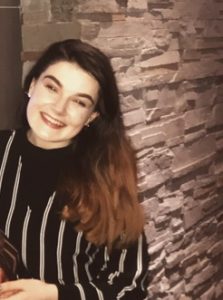
Erin is a 21 year old politics student from Glasgow.
Erin has been engaged in feminist politics for a number of years through participation with Rape Crisis’ young activists group “STAMP” which aims to tackle gender stereotypes.
She volunteers as a support worker for survivors of sexual abuse, and was shortlisted for a Write to End Violence Against Women Award for ‘Best Blog’ from Zero Tolerance Scotland.
Erin has her own blog where she covers issues ranging from politics to football. With these two interests in mind, she has written for a variety of sources including the Scottish Socialist Voice, Period Poverty Scotland and 90 Minute Cynic.
Erin has also commenced an ongoing campaign to make sanitary products free at Celtic Park, in the hope that other teams will follow suit. She hopes to cover the politics of menstruation for her honours dissertation later this year.
It is a truth universally acknowledged that the UK and Scottish media is mainly hostile towards the SNP. But that hasn’t stopped the SNP. The media doesn’t decide who wins elections in Scotland, the people do.
Since the SNP won power the media environment in Scotland has become marginally more favourable. But at the same time distrust of the media from SNP and Yes supporters has grown stronger.
There are some who think the answer to media bias is for the SNP to simply disengage from the MSM. They should consider what the consequence would be. It wouldn’t end the phenomenon known as #SNPBad. Rather, it would mean there was nothing but #SNPBad as our point of view wouldn’t be heard at all. I can’t see how that would be an improvement.
And sometimes I find myself reading a story described as #SNPBad and thinking hold on a minute, there’s a valid point here. The job of any government will never be complete, there will always be problems that need fixed and it’s perfectly legitimate for journalists to highlight them.
Many journalists see their job as holding the powerful to account and the SNP is in power. But the fact that we’re in power in a UK context makes it a wee bit tricky. We’re both in power and not in power, in control yet not in control. It’s more layered and complex than many journalists acknowledge and, perhaps unsurprisingly, lines become blurred and readers become enraged instead of engaged.
We do need to recognise the media is not a single entity. There are good journalists and bad journalists. There are a few who are essentially professional trolls. And there are many journalists who write stories which are good for the SNP and also write stories which are bad for the SNP. That’s just the nature of journalism.
None of this means I don’t understand and share the frustration of people infuriated by sloppy, one-dimensional inaccurate stories about the SNP or Scottish Government in the media. I do.
We should always highlight falsehoods and make sure as many people as possible are made aware of them. And we should also do as much as we can to support new Scottish media.
But I still think SNP supporters can ascribe to the MSM a power it doesn’t have. We are not victims. We are in government and we should have more confidence in ourselves.
Equally, I think Scottish journalists and editors ought to reflect on the fact that a large chunk of the population feels marginalised and alienated from a media which should encompass the diversity of opinion in Scotland. That is not healthy or sustainable.
A degree of scepticism from readers is healthy, however, and should be encouraged. I’d like to see all of us apply the same healthy scepticism we bring to our own media to all media. If you believe the BBC is institutionally programmed to promote the interests of the British Establishment – as I do – then that is even more true of broadcasters like RT. Let’s apply the same critical analysis to their output.
The current debate around fake news, social media and tribal epistemology (which describes the situation where the perceived truth or falseness of a statement depends entirely on who is making it) is not only pertinent for journalists and commentators, it’s very pertinent for us too. I believe that understanding the danger of this phenomenon is crucial for the Yes movement as we gear up to make a renewed case for independence.
Many people in Scotland still feel that the world has gone a bit bonkers and that it’s difficult to know who and what to believe. That condition applies to people who voted Yes and No alike. They are nervous about the future.
In my view that makes it even more vital that the case for independence is made in a rational, calm and evidence-based way. We need to persuade undecided voters – to earn their trust, not scare them away. Rather than absorbing a tribal approach to politics we need to recognise tribalism is our enemy.
I think that means we need to be careful with the language we use when discussing the media. It doesn’t mean we need to be less critical of inaccurate reports but if you find yourself railing against the failing biased phoney fake news media you should probably stop and have a wee lie-down.
The next Yes campaign really needs to be a serious affair, in contrast to the political pantomime of the past few years in the UK. It needs to offer complex solutions to complex problems, it needs to be pluralist, it needs to be diverse, it needs to be inclusive, it needs to be rigorous, it needs to be honest, above all it needs to be grown-up.
In an ideal world a grown-up campaign would be covered by a grown-up media. I’m not holding my breath on that one. But the fact we can’t control how the media will cover it doesn’t change the way we need to campaign. And we need to campaign that way now.


 All Under One Banner – Independence Rally and March – 5th May 2018
 There was no better feeling, than marching through the Yes city of Glasgow with such an amazing turnout and happy bystanders – albeit a very small contingent of Unionists who spent their minutes spouting hatred, giving the middle finger here and there (to small children) and my personal favourite, their nazi salutes. Their vitriol was drowned out by positivity and chants from the crowd. I am so proud of my fellow yessers that we did not stoop to their level and proved that we are the positive change that Scotland so desperately needs
 Two hours of walking certainly works up an appetite and it was at this point that we made our way for the West Brewery (the old Templeton Carpet Factory). The place was absolutely bouncing with attendees and we happily took a spot in the beer garden, sharing tables with other Yes folk. It was here that I discovered that people from all over the country had turned up to show their support. We sat with 2 lovely ladies who had made the journey from Ballachulish. Then there was a rather large group from Fife and Sutherland. My children even spotted their teachers there, all Gaels from the Uists, Barra and Lewis bigging it up for the Gaelic contingent of the cause. It would literally bring a tear to a glass eye to have sat there once more with such a feeling of hope after the despair and grief we had unanimously felt back on the 19th of September 2014.
 The one thing on everyone’s lips however was “I wonder what the BBC will report?” and “Are they going to make it another Fake News Story”? These fears had been somewhat justified with the BBC’s initial reluctance to report the event and when they did, they stated that there were only around 35000 people there. They got this figure from Police Scotland who initially reported close to 90000 in attendance. Give it to the good old BBC to take the lower estimate but then again we all know that they are a State Propaganda machine who are used to push the Westmonster agenda at every turn whilst being supported disproportionally by Scottish Licence Fee payers.





 bikerneil.home.blog